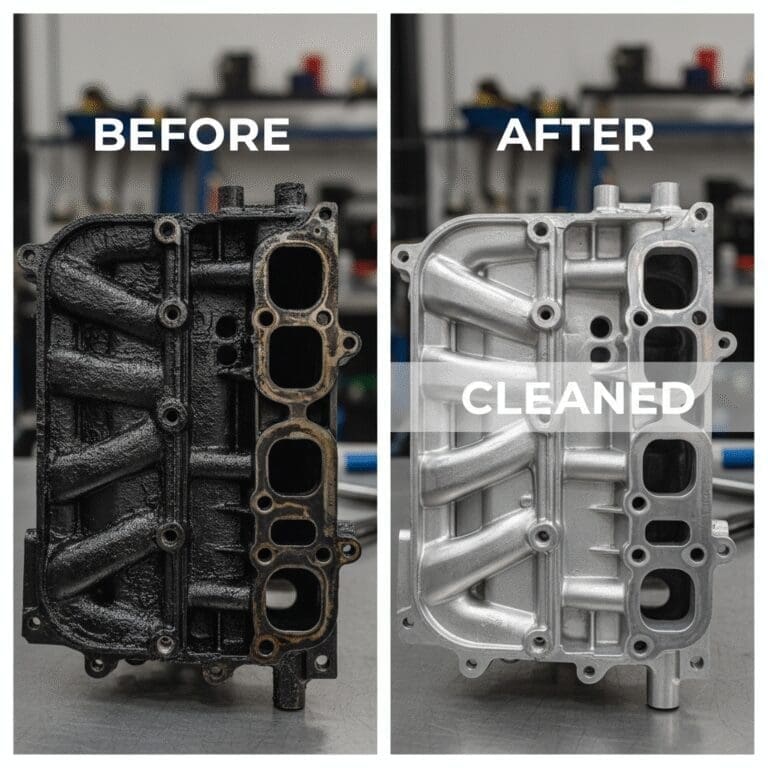
Engine Carbon Cleaning: Benefits, Signs, and When to Book
Sluggish pull, flat spots, rough idle, and “it just feels tired”.
Carbon build-up can choke performance without throwing a warning light.
Here’s how to spot it and when carbon cleaning makes sense.
Carbon build-up is one of those problems that sneaks up on you.
The car still drives.
It still starts.
It just feels slower, rougher, and less sharp than it should.
If you’re into cars, you’ll notice it early.
The throttle response goes lazy.
Low-end torque feels missing.
On some engines, you even get misfires or a light that comes and goes.
This guide covers:
what carbon build-up is, why it happens, what carbon cleaning actually does, and when it’s worth booking in.
We’ll keep it real and aimed at getting your car back to feeling crisp.
Quick checklist: signs of carbon build-up
- ● Slower pull in the mid-range
- ● Flat spots when you accelerate
- ● Rough idle or slight judder at lights
- ● Poor MPG compared to what you used to get
- ● Hesitation when cold
- ● EGR/DPF-related codes keep returning (diesels)
Results may vary by vehicle condition, driving style, and maintenance history. Performance gains and fuel economy improvements are not guaranteed on all vehicles. Individual results may differ significantly.
What is carbon build-up?
Carbon build-up is a mix of soot, oil vapour, and combustion deposits that stick to parts of your intake and combustion system.
Over time it reduces airflow, messes with swirl patterns, and can cause poor combustion.
The deposits most commonly build up in:
- Intake manifold and runners
- EGR valve and EGR cooler (diesels)
- Intake valves (especially direct injection petrol engines)
- Throttle body (some platforms)
- Swirl flaps (where fitted)
If you’ve had EGR issues before, this links in closely:
EGR valve problems and symptoms
.
Why enthusiasts notice it
You know how your car should feel.
Carbon build-up dulls the response.
It makes a healthy engine feel older than it is.
Why it gets ignored
It often doesn’t throw a code.
You adapt to the drop in power over months.
Then one day you drive a healthy car and realise yours isn’t right.
Why carbon build-up happens
Carbon build-up isn’t always “bad maintenance”.
It can happen on well-looked-after cars.
Some engines just build deposits faster.
Your driving pattern matters too.
Short trips and town driving
More cold starts.
More idling.
Less time at proper operating temperature.
Deposits stick faster and don’t burn off.
EGR recirculation (diesels)
EGR sends exhaust gas back into the intake.
That brings soot into places it shouldn’t really live.
Mix it with oil vapour and it turns into thick sludge.
Oil vapour from crankcase breathing
Even a healthy engine breathes a bit.
Oil vapour coats the intake.
Soot sticks to it.
That’s how you get heavy deposits on the manifold and valves.
Direct injection petrol engines
With direct injection, fuel doesn’t wash the back of the intake valves.
That makes some petrol engines more prone to valve deposits over time.
If your diesel also struggles with DPF behaviour, carbon build-up and soot go hand in hand.
This is a strong companion read:
why short journeys ruin your DPF
.
Benefits of engine carbon cleaning (what you can feel)
People sometimes expect carbon cleaning to feel like a remap.
It isn’t that.
What it does is restore what you’ve lost.
On a car that’s been gradually getting worse, that can feel like a big change.
Sharper throttle response
Better airflow means the engine reacts faster when you get on it.
Less hesitation.
Less “thinking time”.
Smoother idle and pull-away
Carbon build-up can upset air control at low speed.
Cleaning can bring back a stable idle and smoother pull from junctions.
Better MPG consistency
If your intake is restricted, you often use more throttle to get the same speed.
Cleaning can help your MPG stabilise, especially on mixed driving.
A better base for remapping
Remaps work best on healthy engines.
If the intake is clogged, you’re tuning around a restriction.
Sort the basics first and your results are usually cleaner.
If you’re chasing smooth power gains after you’ve sorted health issues, this is the next step:
ECU remapping benefits
.
Results may vary by vehicle condition, driving style, and maintenance history. Performance gains and fuel economy improvements are not guaranteed on all vehicles. Individual results may differ significantly.
When to book carbon cleaning (timing matters)
You don’t need carbon cleaning every year.
You also don’t want to wait until the car is in limp mode.
Here are the situations where it makes the most sense.
1) Before a Stage 1 remap
If the car feels flat or inconsistent, carbon cleaning can be a smart move before tuning.
You’re giving the engine proper airflow again, so the calibration has a better starting point.
Useful read:
checks before remap
.
2) After lots of short trips
If your car does school runs, commuting in traffic, or constant short journeys, deposits build fast.
It’s not your fault.
It’s just how modern engines behave.
3) If EGR and DPF issues keep returning
On diesels, soot and carbon issues overlap.
If you’re dealing with repeat EGR problems or DPF faults, carbon cleaning can form part of the fix.
You want the air path clean so the engine burns properly.
If DPF is part of your story, start here:
DPF regeneration explained
.
4) After buying a used car
You don’t know how it was driven.
A lot of cars are maintained on paper but spend their life doing cold starts and town miles.
A clean-up can bring a used car back to feeling “right”.
What carbon cleaning involves (and what it doesn’t)
“Carbon cleaning” gets thrown around online like it’s one single treatment.
In reality, the right method depends on the engine and where the deposits are.
Some engines respond well to intake cleaning.
Others need more involved work to get real results.
1) Diagnostic first (always)
We scan the car and check for related issues.
Not every “sluggish car” is carbon.
MAF/MAP problems, boost leaks, or sensor drift can feel similar.
This guide covers sensor faults that mimic carbon issues:
MAF/MAP sensor failure
.
2) Intake and EGR cleaning (diesels)
We target the intake path where soot builds up.
If the EGR valve is sticking, cleaning can restore function and improve driveability.
3) Direct injection valve deposits (petrol)
Some engines suffer valve deposits that cause misfires, hesitation, and poor response.
Cleaning can restore airflow and smoothness.
4) What it doesn’t do
Carbon cleaning won’t fix a failing turbo, a cracked DPF, or worn injectors.
If the car has another fault, we’ll tell you and show you what we’ve found.
If you’re unsure whether your car is down on power due to carbon or something else, this can help:
turbo boost problems and loss of power
.
Results may vary by vehicle condition, driving style, and maintenance history. Performance gains and fuel economy improvements are not guaranteed on all vehicles. Individual results may differ significantly.
Engine Carbon Cleaning FAQs
Is carbon cleaning worth it on a daily driver?
If the car feels flat, MPG has dropped, or you do lots of short trips, it often is.
The biggest benefit tends to be restored response and smoother running, not “extra” power.
Will carbon cleaning stop DPF issues?
It can help if poor airflow and soot build-up are part of the problem.
But DPF faults have multiple causes.
We scan and check the full picture before saying what will help your car.
Can I just use fuel additives instead?
Additives can help keep things cleaner over time.
They rarely remove heavy build-up that’s already restricting airflow.
If the deposits are thick, you need a proper clean, not a bottle.
Is carbon cleaning a good idea before a remap?
Yes, if your car shows signs of restricted airflow or inconsistent pull.
Remapping works best on a healthy base, so cleaning first can make the tuning feel smoother.
Are results guaranteed?
No. Results vary by vehicle condition and how heavy the build-up is.
Some cars feel noticeably sharper.
Others see a smaller change because the main issue lies elsewhere.
Results may vary by vehicle condition, driving style, and maintenance history. Performance gains and fuel economy improvements are not guaranteed on all vehicles. Individual results may differ significantly.
Want your car to feel sharp again? Book engine carbon cleaning
We’ll scan it first, confirm what’s causing the symptoms, then clean the right parts.
Simple plan. Proper results.
Free diagnostic scan
Clear advice
Local, quick booking
Unit 2, 2 Cutts Street, Wood Terrace, Hanley, ST1 4LX
07404022260
✉️ info@proremapping.com
Serving Stoke-on-Trent, Staffordshire, Moorlands, Cheshire East
Results may vary by vehicle condition, driving style, and maintenance history. Performance gains and fuel economy improvements are not guaranteed on all vehicles. Individual results may differ significantly.
Related reads
EGR valve problems
Symptoms, causes, and what usually fails first.
Short journeys and DPF problems
How soot builds and what you can do about it.
MAF/MAP sensor faults
Common power killers that mimic carbon issues.
Engine carbon cleaning service
Book in and get a proper diagnostic-led clean.