Turbo Boost Problems: Loss of Power & How to Fix It
Experiencing sudden power loss, black smoke, or sluggish acceleration? Your turbo boost system might be failing. Here’s everything you need to know about diagnosing and fixing turbo boost problems in 2025.
If your diesel car or van suddenly feels like it’s lost half its power, struggles to accelerate, or produces black smoke under load, you’re likely dealing with turbo boost problems. The turbocharger is responsible for forcing extra air into your engine to create more power—but when the boost pressure drops or fails completely, performance plummets.
In this guide, we’ll cover the 7 most common causes of turbo boost problems, how to diagnose them, what repairs cost, and how to prevent future issues. Whether you’re a DIY enthusiast or looking for professional help, this article will help you get your vehicle back to full power.
Quick Answer: What Causes Turbo Boost Problems?
The most common causes are boost leaks (split hoses or loose clamps), wastegate failure, faulty boost pressure sensors, blocked intercoolers, turbo actuator problems, DPF/EGR issues, and physical turbo damage. Diagnosis typically costs £50-£100, while repairs range from £20 (hose replacement) to £1,500+ (turbo replacement).
Common Symptoms of Turbo Boost Problems
Turbo boost issues don’t always announce themselves with a dramatic failure. Here are the warning signs to watch for:
- Sudden loss of power – Your vehicle feels sluggish, especially during acceleration or uphill driving
- Black or grey smoke – Excess fuel isn’t being burned efficiently due to insufficient air
- Turbo whistle or hissing – Indicates a boost leak (air escaping from the system)
- Check engine light – Often accompanied by fault codes P0234, P0299, P2263, or P0243
- Limp mode activation – ECU limits power to protect the engine
- Poor fuel economy – Engine works harder to compensate for lost boost
- Turbo lag or delayed response – Turbo takes longer to spool up than normal
If you’re experiencing any of these symptoms, it’s crucial to diagnose the issue quickly. Running a vehicle with turbo problems can lead to further engine damage and costly repairs.
7 Main Causes of Turbo Boost Problems
1. Boost Leaks (Most Common)
What it is: Air escaping from the turbo system before reaching the engine, usually through split intercooler hoses, loose clamps, or cracked pipes.
Symptoms: Hissing sound, loss of power, turbo whistle
Fix: Replace damaged hoses or tighten clamps (£20-£150)
2. Wastegate Failure
What it is: The wastegate controls boost pressure by diverting exhaust gases. If it sticks open, boost pressure drops; if stuck closed, you get overboost.
Symptoms: Inconsistent power delivery, overboost or underboost codes
Fix: Wastegate repair or replacement (£200-£600)
3. Faulty Boost Pressure Sensor (MAP Sensor)
What it is: The MAP (Manifold Absolute Pressure) sensor tells the ECU how much boost is being generated. A faulty sensor gives incorrect readings.
Symptoms: Check engine light, limp mode, poor performance despite turbo working
Fix: Replace MAP sensor (£50-£150)
4. Turbo Actuator Problems
What it is: The actuator controls the turbo’s variable geometry or wastegate position. Electronic or vacuum actuators can fail.
Symptoms: Inconsistent boost, turbo not spooling, fault codes P0243 or P2263
Fix: Actuator replacement or recalibration (£150-£500)
5. Blocked or Damaged Intercooler
What it is: The intercooler cools compressed air before it enters the engine. Oil contamination or physical damage reduces efficiency.
Symptoms: Gradual power loss, high intake temperatures
Fix: Clean or replace intercooler (£100-£400)
6. DPF or EGR Issues
What it is: A blocked DPF or stuck EGR valve creates excessive back pressure, preventing the turbo from building boost properly.
Symptoms: Loss of power, black smoke, DPF warning light
Fix: DPF cleaning (£150-£400) or EGR cleaning/replacement (£200-£600)
7. Physical Turbo Damage
What it is: Worn bearings, damaged turbine blades, or shaft play cause the turbo to fail mechanically.
Symptoms: Loud grinding or rattling, blue smoke (oil burning), complete loss of boost
Fix: Turbo rebuild (£400-£800) or replacement (£800-£2,000+)
How to Diagnose Turbo Boost Problems
Proper diagnosis is essential before spending money on repairs. Here’s the step-by-step process:
DIY Checks You Can Do:
- Visual inspection – Check all intercooler hoses, pipes, and clamps for splits, cracks, or looseness
- Listen for leaks – Rev the engine and listen for hissing sounds near the turbo and intercooler
- Check for oil in intercooler – Remove intercooler hose and check for oil pooling (indicates turbo seal failure)
- Inspect turbo for play – With engine off, try to move the turbo shaft—excessive movement means bearing wear
- Read fault codes – Use an OBD2 scanner to check for boost-related codes
Professional Diagnostics Include:
- Live data monitoring of boost pressure vs target pressure
- Smoke test to identify exact location of boost leaks
- Actuator function testing
- Turbo shaft play measurement
- Back pressure testing (to identify DPF/exhaust restrictions)
Cost: £50-£100 for comprehensive turbo diagnostics
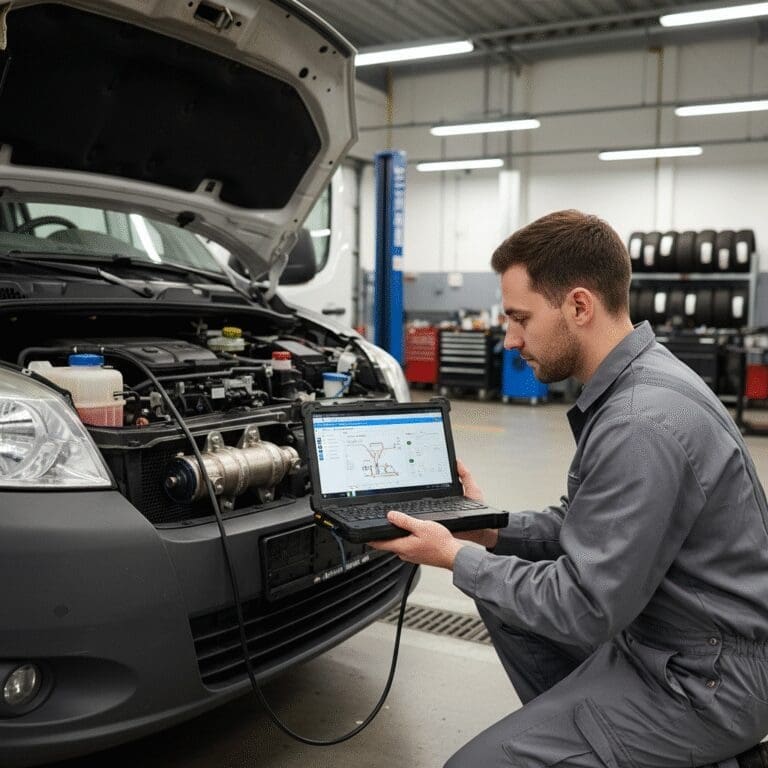
At Pro Remapping, we use advanced diagnostic equipment to pinpoint turbo boost problems quickly and accurately, saving you time and money on unnecessary repairs.
Turbo Boost Problem Repair Costs
| Problem | Typical Cost | Repair Time |
|---|---|---|
| Boost leak (hose/clamp) | £20-£150 | 30 mins – 1 hour |
| MAP sensor replacement | £50-£150 | 30 mins |
| Intercooler cleaning | £100-£200 | 1-2 hours |
| Actuator replacement | £150-£500 | 2-3 hours |
| Wastegate repair | £200-£600 | 3-4 hours |
| DPF cleaning | £150-£400 | 2-4 hours |
| Turbo rebuild | £400-£800 | 4-6 hours |
| Turbo replacement | £800-£2,000+ | 4-8 hours |
Prices vary based on vehicle make/model and parts availability. Always get a diagnostic before committing to expensive repairs.
How to Prevent Turbo Boost Problems
Most turbo boost issues can be avoided with proper maintenance and driving habits:
- Regular oil changes – Use high-quality oil and change every 6,000-10,000 miles (turbos rely on clean oil for lubrication)
- Let the turbo cool down – Idle for 30-60 seconds before shutting off after hard driving
- Inspect hoses and clamps – Check for wear every 6-12 months, especially on high-mileage vehicles
- Keep DPF and EGR clean – Regular motorway driving helps prevent blockages
- Address warning lights immediately – Small problems become expensive if ignored
- Use quality fuel – Poor fuel quality can cause carbon buildup in the turbo and intake system
- Avoid aggressive cold starts – Let the engine warm up before heavy acceleration
When to Get Professional Help
While some turbo boost problems can be fixed at home (like replacing a split hose), many require professional diagnostics and repair. You should seek expert help if:
- You can’t locate the source of a boost leak after visual inspection
- Fault codes indicate actuator, wastegate, or turbo mechanical problems
- The turbo is making grinding, rattling, or unusual noises
- You’ve replaced obvious parts (hoses, sensors) but the problem persists
- The vehicle is in limp mode and won’t clear after restarting
- There’s oil in the intercooler or blue smoke from the exhaust
At Pro Remapping, we offer comprehensive turbo diagnostics and repair services in Stoke-on-Trent and surrounding areas. Our technicians use advanced diagnostic tools to identify the exact cause of your turbo boost problems—saving you time and money on guesswork repairs.
Experiencing Turbo Boost Problems?
Get expert diagnostics and repairs from Pro Remapping. We’ll identify the problem quickly and get your vehicle back to full power.
Book Your Diagnostic →Or call us directly: 01782 123456
Boost Your Performance After Repairs
Once your turbo boost system is working properly, you might want to unlock even more performance. A professional ECU remap can safely increase boost pressure, improve throttle response, and deliver significant power gains—all while maintaining reliability.
Our ECU remapping service includes:
- +20-40% power increase (depending on vehicle)
- Improved torque delivery across the rev range
- Better fuel economy (when driven sensibly)
- Smoother power delivery and reduced turbo lag
- Free BHP check before and after to prove gains
Frequently Asked Questions
What does it feel like when turbo boost fails?
When turbo boost fails, your vehicle will feel dramatically underpowered—like you’re driving with the handbrake on. Acceleration becomes sluggish, especially uphill or when overtaking. You may also notice black smoke, unusual noises (hissing or whistling), and the check engine light may illuminate. In severe cases, the ECU will activate limp mode, limiting engine speed to 3,000 RPM or less.
Can I drive with turbo boost problems?
You can drive short distances at low speeds, but it’s not recommended for extended periods. Driving with turbo problems can cause further engine damage, especially if the issue is oil-related (turbo seal failure) or involves excessive back pressure (blocked DPF). If you’re in limp mode or experiencing severe symptoms, get diagnostics as soon as possible to avoid costly secondary damage.
How much does it cost to fix turbo boost problems?
Repair costs range from £20 for a simple hose replacement to £2,000+ for full turbo replacement. Most common fixes fall in the £100-£600 range (boost leaks, sensors, actuators, wastegate repairs). Professional diagnostics (£50-£100) will identify the exact problem before you commit to repairs, preventing unnecessary spending.
What are the most common turbo boost fault codes?
The most common fault codes for turbo boost problems are: P0299 (Turbo/Supercharger Underboost), P0234 (Turbo/Supercharger Overboost), P0243 (Turbo Wastegate Solenoid Malfunction), P2263 (Turbo Boost System Performance), and P0237/P0238 (Turbo Boost Sensor Circuit Low/High). These codes help pinpoint whether the issue is mechanical, electrical, or sensor-related.
How long does a turbo last after boost problems start?
It depends on the severity and cause. A minor boost leak can be driven on for weeks (though not recommended), while severe turbo damage (bearing failure, shaft play) can destroy the turbo within hours of continued driving. If you hear grinding noises or see blue smoke, stop driving immediately. Early diagnosis and repair can often save the turbo from complete failure.
Related Articles
Common Diesel Engine Faults
Learn about the most common diesel problems and warning lights
DPF Cleaning Cost Guide
Complete guide to DPF cleaning prices and when it’s needed
ECU Remapping Benefits
Discover how remapping improves power, economy, and performance
Get Your Turbo Boost Problems Fixed Today
Don’t let turbo issues hold you back. Our expert technicians in Stoke-on-Trent can diagnose and repair turbo boost problems quickly and affordably. We offer mobile and garage-based services across Staffordshire, Cheshire, and the Moorlands.
Contact Pro Remapping or call 01782 123456 to book your diagnostic.