ECU Remap Fuel Economy: How Much MPG Can You Actually Save?
Table of Contents
ToggleA clear, honest look at what a remap does to fuel consumption — when you’ll save money and when you won’t.
One of the most common questions we get asked before a remap is: “Will it save me fuel?” The honest answer is: it depends on how you drive. A well-executed ECU remap can improve remap fuel economy by 5–15% on diesel engines and 3–8% on petrol — but only if you drive in a way that takes advantage of the improved torque curve.
This guide explains exactly how a remap affects fuel consumption, which vehicles benefit most, and what kind of real-world savings you can expect.
How Does a Remap Affect Fuel Economy?
From the factory, manufacturers tune engines conservatively. They set fuelling maps, boost pressure, and ignition timing to protect components across a wide range of conditions — fuel quality, temperatures, maintenance levels — and to meet different market specifications from the same base engine.
The result is an engine that works harder than it needs to at everyday driving speeds. When a remap optimises the fuel, boost, and timing maps, the engine produces more torque at lower RPM. That means you don’t need to push the engine as hard to maintain speed or pull away cleanly — and that’s where the fuel saving comes from.
The key principle: A remap improves remap fuel economy not by burning less fuel at the same power output, but by achieving the same result with less throttle. If you keep driving with the same throttle inputs as before, you’ll use more fuel — because more fuel equals more power equals more speed. Use the extra torque to lift off sooner and change up earlier, and you’ll see genuine savings.
Typical MPG Improvements by Engine Type
| Engine Type | Typical MPG Improvement | Best Results |
|---|---|---|
| Diesel (turbocharged) | 5–15% | Most consistent fuel savings — diesels respond especially well to remap torque gains |
| Petrol (turbocharged) | 3–8% | Savings possible but less dramatic than diesels; depends heavily on driving style |
| Petrol (naturally aspirated) | 0–5% | Modest improvement at best; power gains come from NA engines rather than efficiency |
| Diesel (towing or commercial) | 8–15% | Towing loads benefit significantly — more torque means less throttle under load |
These are real-world estimates based on drivers who adapt their driving style after a remap. Drivers who immediately use the extra power for faster acceleration will see little to no fuel saving.
Diesel Remaps and Fuel Economy: Why Diesels Benefit Most
Turbocharged diesel engines are the biggest winners from a fuel-economy-focused remap. Here’s why:
Low-RPM Torque Delivery
A diesel remap typically increases mid-range torque significantly — often between 1,500 and 3,000 rpm. In day-to-day driving, this is exactly where you spend most time: pulling away from roundabouts, overtaking, and cruising on A-roads.
With more torque available at 1,800 rpm instead of 2,500 rpm, you can change up a gear earlier, run at lower RPM at motorway speed, and lift off the throttle sooner without losing momentum. That’s less fuel used per mile.
Reduced Need to Floor It
Before a remap, many diesel drivers spend time with their foot deeper into the throttle than necessary — particularly when joining motorways or climbing hills. Post-remap, the engine pulls confidently at lighter throttle positions, reducing fuel burn in those situations.
Commercial Vehicles and Vans
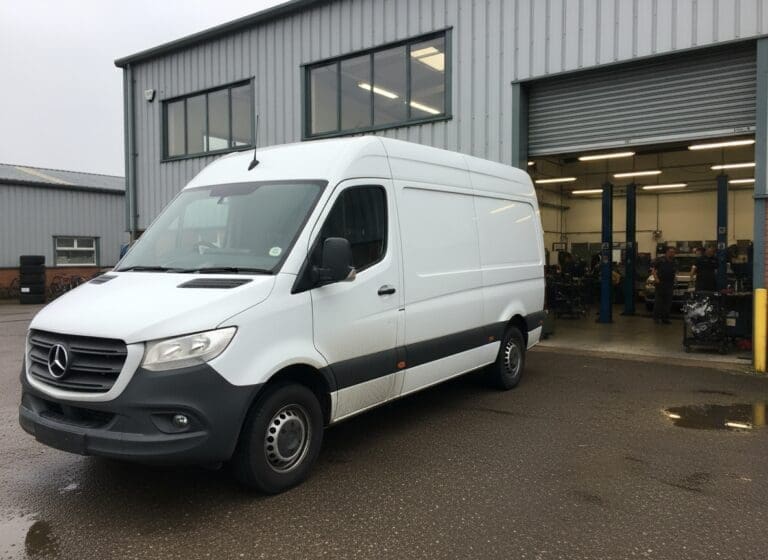
Vans and light commercial vehicles spend a lot of time at partial load — loaded one way, empty the other. A remap that improves torque delivery at everyday driving loads sees meaningful fuel savings across high annual mileages. A driver doing 40,000 miles per year at an average 35 mpg, saving 10%, saves over 100 litres of diesel annually.
When Will You Not Save Fuel?
A remap is not a guaranteed fuel saving in every situation. Here’s when savings are unlikely:
Aggressive Driving After a Remap
If a remap improves power by 30 bhp and your response is to use all 30 bhp more frequently, fuel consumption will go up, not down. The performance is there if you want it — but the economy only comes from discipline at the throttle.
Short Urban Trips
Stop-start city driving doesn’t allow the engine to work in its most efficient range. A remap helps most on A-roads, dual carriageways, and motorways where steady-state driving lets the improved torque curve do its work.
Petrol Naturally Aspirated Engines
Naturally aspirated petrol engines have less headroom for remap gains. Without a turbo to tune, the changes are smaller and the fuel savings are marginal. Performance is usually the bigger reason to remap these engines.
Worn or Poorly Maintained Engines
A remap on an engine with a clogged DPF, dirty fuel injectors, or failing sensors won’t deliver clean fuel savings. Sort the mechanical health of the engine first — then remap on a clean base.
Real-World Example: Diesel Hatchback, 40,000 Miles per Year
Consider a 2.0 TDI diesel hatchback driven 40,000 miles per year, currently returning 45 mpg on a mix of motorway, A-road, and town driving.
- Diesel cost: ~£1.55/litre (current UK average)
- Annual fuel spend at 45 mpg: ~£3,600
After a Stage 1 remap (£200–£350), the same driver — adapting their driving style to use lower RPMs and lighter throttle — achieves 50 mpg (an 11% improvement).
- Annual fuel spend at 50 mpg: ~£3,240
- Annual saving: ~£360
- Remap cost payback period: under 12 months
This isn’t a guaranteed outcome, but it’s a realistic one for diesel drivers who are motivated to drive more economically and have a healthy engine to start with.
Economy Remap vs Performance Remap: Is There a Difference?
Some tuners offer separate “economy” and “performance” maps. In practice, a well-calibrated Stage 1 remap achieves both simultaneously on most turbocharged diesel engines — improving both power and efficiency through better fuel delivery and boost management.
An “economy map” typically prioritises lower boost targets and earlier fuel cut-off, reducing power gains but maximising MPG improvement. A “performance map” prioritises power at the expense of some economy. Most drivers do well on a standard Stage 1 map that balances both.
Be cautious of promises: No legitimate remap can double your MPG or guarantee a specific percentage saving. Results depend on the vehicle, driving style, and engine condition. Anyone promising guaranteed fuel figures should be approached carefully.
What to Check Before Remapping for Fuel Economy
Engine Health First
A remap on a poorly maintained engine will underperform. Before booking a remap, check:
- Air filter is clean and flowing freely
- Fuel injectors are in good condition (no misfires, no smoke)
- DPF isn’t blocked or restricted (relevant for diesels)
- No active fault codes that could affect fuelling or boost
Confirm Your Baseline MPG
Track your actual fuel consumption for two full tanks before a remap. Fill up, record the mileage, fill up again, divide miles by litres — that’s your real MPG. Compare it after a few weeks post-remap to measure the actual improvement accurately.
Drive Differently After the Remap
A remap is only half the equation. The driver is the other half. Use the improved low-end torque by: changing up a gear earlier, accelerating more gently, and maintaining steady speeds rather than hunting for pace. The savings follow the driving style.
Frequently Asked Questions
Will a remap improve my motorway MPG more than town driving?
Yes, significantly. Motorway driving at steady speeds — especially between 50–70 mph — is where the improved torque curve makes the most difference. Running at a lower RPM in a higher gear while maintaining speed burns less fuel. Town driving sees smaller gains because stop-start patterns don’t allow steady-state efficiency improvements.
Can a remap damage my engine if I drive economically?
No. A well-calibrated remap keeps all engine parameters within safe limits. Driving gently after a remap — using light throttle and early gear changes — produces no extra stress on the engine. The components are well within their design limits at light throttle positions.
How long until I notice the fuel saving?
Most drivers notice improved responsiveness immediately, but calculating fuel economy takes at least two full tanks (ideally three or four) to give a reliable average. Allow 4–6 weeks of normal driving before comparing MPG figures.
Does a remap affect my insurance?
Technically, a remap is a modification and should be declared to your insurer. Failure to declare modifications can invalidate claims. Some insurers accept remaps with a small premium increase; others exclude them. Check with your insurer before booking a remap.
Does remapping affect the MOT?
A Stage 1 remap on a diesel does not affect MOT pass criteria in normal circumstances, provided the DPF is intact and functional and emissions remain within the test thresholds. Remaps that remove the DPF or alter emissions systems will cause an MOT failure.
Want Better Fuel Economy From Your Diesel?
A Stage 1 remap starts from £200 and typically pays for itself within a year for diesel drivers covering high mileage. We remap at our Hanley garage in Stoke-on-Trent with same-day appointments available. Get in touch to find out what’s achievable on your specific vehicle.