EGR Valve Reset: Does It Actually Work?
Table of Contents
TogglePro Remapping — Stoke-on-Trent, Staffordshire
The EGR valve is one of the most commonly faulted components on modern diesel engines. When the warning light comes on and a fault code is stored, the first question most drivers ask is: “Can I just reset it?”
The short answer is: sometimes. But understanding why a reset works in some cases and not others is what separates a temporary fix from a proper solution. This guide explains exactly what an EGR valve reset does, when it is enough, and when you need a deeper approach.
What Does the EGR Valve Actually Do?
EGR stands for Exhaust Gas Recirculation. The valve’s job is to redirect a controlled amount of exhaust gas back into the engine’s intake. This reduces combustion temperatures and lowers harmful nitrogen oxide (NOx) emissions — a legal requirement for most diesel vehicles sold in the UK from 2000 onwards.
The valve opens and closes in response to commands from the ECU (engine control unit), typically based on engine load, speed, and temperature. On most modern diesels, it is an electronically controlled valve with a position sensor that feeds data back to the ECU continuously.
What Does an EGR Valve Reset Actually Mean?
When a specialist talks about “resetting” an EGR valve, it can mean two different things depending on the context:
1. Clearing the fault code
Using a diagnostic tool, the stored fault code is deleted from the ECU’s memory. The warning light goes off. The engine management system starts fresh with no record of the previous fault. This is the most basic form of reset and takes less than a minute with the right equipment.
2. Resetting the valve’s adaptive position
More advanced diagnostic tools can reset the EGR valve’s learned calibration. Modern EGR valves learn their minimum and maximum positions over time. If those learned values drift or become corrupted — sometimes after a battery replacement or software update — resetting the adaptive data forces the valve to relearn its correct operating range from scratch.
When Does an EGR Valve Reset Work?
A reset genuinely resolves the issue in a small number of cases. These are the scenarios where it is likely to stick:
Software or sensor glitch
Occasionally, the ECU logs a fault due to a momentary sensor dropout, a brief power interruption, or a one-off communication error. If the valve itself is clean and functioning correctly, clearing the code is all that is needed.
After a battery replacement
Disconnecting the battery can corrupt EGR learned values. A reset allows the valve to relearn its positions correctly and often resolves symptoms like hunting idle or rough running that appeared after a battery change.
After a software update
ECU software updates sometimes require a full reset of component learned values. An EGR reset is often part of the post-update calibration process.
Mild intermittent fault
If a vehicle is used mainly on short stop-start journeys, the EGR valve rarely gets hot enough to fully clear itself. Occasional faults may appear without the valve being heavily fouled. A reset combined with a longer motorway run can sometimes resolve this.
When Does an EGR Valve Reset Not Work?
In most cases where drivers are searching for how to reset an EGR valve, the underlying issue is physical rather than electronic. A reset will not fix:
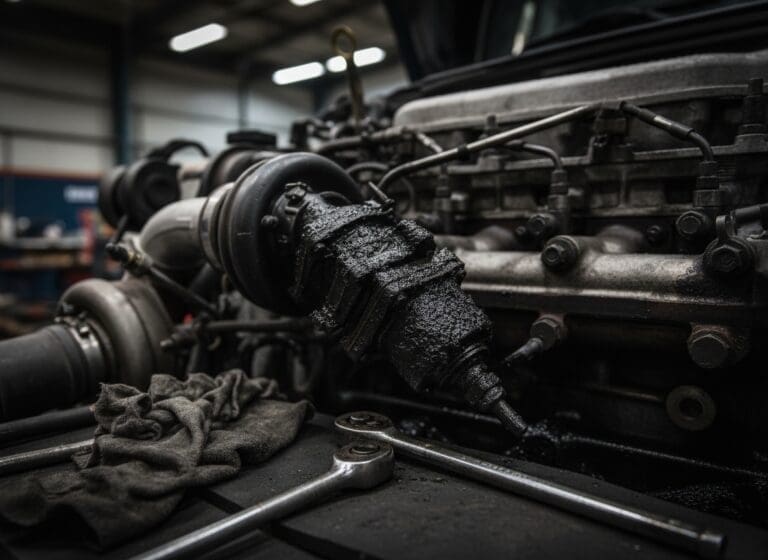
- Heavy carbon build-up: If the valve is caked in carbon deposits and is physically sticking, clearing a fault code will not free it. The fault will return within miles.
- Failed solenoid or actuator: If the electrical components inside the valve have failed, a reset cannot bring them back to life.
- Seized or broken valve: Physical damage requires physical repair. No software process can address a cracked housing or a snapped actuator shaft.
- Intake manifold blockage: Sometimes the EGR valve itself is fine but the ports leading to the intake are blocked with carbon. The fault will keep returning until those passages are cleared.
- Wiring or connector fault: Corroded connectors, chafed wiring, or a failed position sensor will continue generating fault codes regardless of how many resets are performed.
What Are the Symptoms of an EGR Valve Problem?
Knowing what to look for helps you judge how serious the fault is before booking a diagnosis. Common symptoms include:
- Engine management light on (often alongside a P0400, P0401, P0402, or P0404 fault code)
- Rough idle or hunting idle — the engine revs fluctuating at standstill
- Loss of power, particularly under load or when accelerating
- Increased fuel consumption
- Hesitation or flat spots when accelerating
- Black smoke from the exhaust, particularly on acceleration
- Engine going into limp mode and limiting to a fixed low power output
- Smell of exhaust fumes in or near the vehicle
What Are Your Real Options?
Once a diagnostic scan confirms the EGR valve is at fault, there are several routes depending on the severity of the problem.
| Option | What it does | Best suited when |
|---|---|---|
| Code reset only | Clears the fault code from ECU memory | Software glitch, one-off fault, post-battery replacement |
| EGR valve clean | Carbon deposits removed from valve and intake ports | Valve is sticking but not mechanically damaged |
| EGR valve replacement | Faulty valve unit replaced with new or remanufactured part | Solenoid failed, valve seized, physical damage present |
| EGR remap (soft delete) | ECU software modified to disable EGR operation | Off-road use, competition vehicles, persistent recurring faults |
The Professional Diagnostic Approach at Pro Remapping
When a vehicle comes to us with an EGR-related fault, we do not simply clear the code and hope for the best. Our process starts with a full diagnostic scan using professional-grade equipment — not a cheap generic code reader.
We look at:
- The specific fault code stored and any freeze frame data captured at the moment of the fault
- EGR valve position sensor live data — checking whether the valve is physically reaching its commanded position
- Intake airflow readings — to determine whether intake carbon build-up is restricting flow
- Any secondary faults that may be related, such as boost pressure issues or turbo faults
Only once we understand the full picture do we recommend a course of action. In many cases, a professional clean combined with a reset is enough. In others, a replacement is the only reliable long-term fix.
EGR Fault Light On? Get It Properly Diagnosed
A code reset might clear the light for now — but if the fault returns, you need a proper look at what is actually causing it. At Pro Remapping in Stoke-on-Trent, we run a full live diagnostic to find the real cause and give you an honest answer about the best fix.
Unit 2, 2 Cutts Street, Hanley, ST1 4LX
Covering Staffordshire, Newcastle-under-Lyme, Leek, Stafford & surrounding areas
Frequently Asked Questions
Can I reset an EGR valve myself at home?
You can clear a fault code yourself using an OBD-II reader, which costs from around £20. However, a basic code reader cannot perform the more advanced adaptive position reset that some EGR faults require. More importantly, clearing the code does not fix any underlying physical problem — it only removes the symptom temporarily. For a proper diagnosis, professional-grade equipment and live data analysis are needed.
How long does an EGR valve reset last?
If the reset is the right fix — for example, after a battery replacement or a one-off sensor glitch — it can last indefinitely. If the fault is physical, the light will typically return within a short period, often under 100 miles. A recurring fault after a reset is a clear sign that something physical needs attention.
Will an EGR fault cause my car to fail its MOT?
Potentially, yes. An active engine management light at the time of the MOT is an automatic MOT failure. Additionally, a malfunctioning EGR system may cause elevated emissions readings, which is tested directly on the emissions bay section of the MOT. It is worth having an EGR fault properly resolved before presenting a vehicle for its test.
How much does it cost to clean or replace an EGR valve?
EGR valve cleaning typically costs significantly less than replacement and is worthwhile when the valve is not mechanically damaged. Replacement costs vary depending on the vehicle make and model — some EGR valves are straightforward to access while others require significant dismantling. A proper diagnostic check first prevents spending money on the wrong fix.
What fault codes are associated with EGR valve problems?
The most common EGR-related fault codes are P0400 (EGR flow malfunction), P0401 (EGR flow insufficient), P0402 (EGR flow excessive), and P0404 (EGR circuit range or performance). Additional codes may appear related to intake air temperature, boost pressure, or NOx sensors depending on how long the fault has been present and how it has affected other systems.
Pro Remapping is based in Hanley, Stoke-on-Trent, and provides diesel diagnostics, ECU remapping, EGR services, AdBlue solutions, DPF services, and engine carbon cleaning across Staffordshire and surrounding areas. All EGR-related services on road vehicles are carried out in line with UK emissions regulations.