Engine Carbon Cleaning UK: What It Is, What It Costs, and Does It Work?
Table of Contents
ToggleEngine running rough, lacking power, or the DPF blocking more frequently than it should? Carbon cleaning could be the answer — if your engine actually needs it.
Engine carbon cleaning has grown rapidly as a service in UK garages — but so has the confusion around what it actually does, when it works, and when it’s a waste of money.
This guide cuts through the marketing to explain what engine carbon cleaning involves, what it costs in 2026, what it can genuinely fix, and what it can’t.
What Is Engine Carbon Cleaning?
Over time, carbon deposits build up inside diesel (and some petrol) engines — on intake valves, injectors, the EGR valve, DPF, and combustion chamber walls. These deposits form from unburned fuel residue, soot, and oil vapour — and they accumulate faster on vehicles that do a lot of short journeys or city driving at low temperatures.
Engine carbon cleaning removes or reduces these deposits to restore cleaner combustion and better engine performance. There are two main methods used in the UK today.
Method 1: HHO / Hydrogen Carbon Cleaning (Most Common)
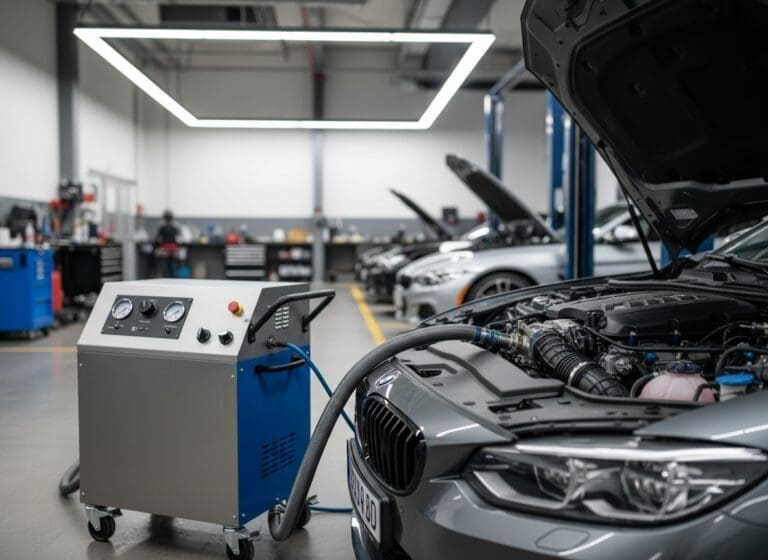
A machine generates hydrogen gas (HHO) by electrolyzing water. This gas is fed into the engine’s air intake while the engine runs. As the hydrogen burns inside the combustion chamber, it reacts with and breaks down carbon deposits, which are then expelled through the exhaust.
The process takes 30–60 minutes. No engine disassembly is required. The vehicle runs throughout the process.
Method 2: Walnut Blasting (More Thorough, More Involved)
Used specifically for direct-injection petrol engines where heavy carbon buildup on intake valves is a known problem (BMW N20, VAG 1.8/2.0 TSI, etc.), walnut blasting involves removing the intake manifold and physically blasting the intake valves with crushed walnut shells to remove hardened deposits.
This method is more thorough but requires partial engine disassembly and typically takes 2–4 hours. It’s more expensive but also more effective for vehicles where intake valve carbon is a structural problem rather than a general maintenance issue.
Engine Carbon Cleaning Cost UK 2026
| Method | Typical Cost | Time Required | Best For |
|---|---|---|---|
| HHO Hydrogen Carbon Clean | £80–£150 | 45–90 minutes | General maintenance, DPF support, mild performance loss |
| Walnut Blasting (Intake Valves) | £250–£500 | 2–4 hours | Direct-injection petrol engines with known carbon buildup issues |
| Chemical Intake Clean | £60–£120 | 30–60 minutes | Light deposits, general maintenance, injector cleaning |
Worth knowing: Hydrogen carbon cleaning is a maintenance service, not a repair. It’s most effective on engines that haven’t already suffered severe carbon buildup. If your engine has a specific fault — like a blocked injector or a failed EGR valve — carbon cleaning alone won’t fix it.
Does Engine Carbon Cleaning Actually Work?
This is the most important question — and the honest answer is: it depends on the vehicle, its history, and what you’re expecting it to fix.
When Carbon Cleaning Works Well
Smoother Idle
On engines that have been running rough at idle due to partial carbon fouling of injectors or intake valves, a hydrogen clean can restore a noticeably smoother tickover. This is one of the most consistently reported improvements.
Improved Throttle Response
Carbon deposits on the throttle body and intake reduce airflow. Cleaning them out allows the engine to breathe more freely, which often improves throttle sharpness and mid-range response.
DPF Maintenance Support
Reducing combustion chamber soot means less soot reaching the DPF. Carbon cleaning on high-mileage diesel vehicles — especially those doing lots of short journeys — can slow the rate of DPF loading and reduce the frequency of warning lights.
Improved Fuel Economy
Cleaner combustion burns fuel more efficiently. On vehicles with significant carbon buildup, an improvement in fuel economy is possible after cleaning. Results vary by vehicle and driving conditions.
When Carbon Cleaning Won’t Fix the Problem
Carbon cleaning is not a diagnostic. It doesn’t identify what’s wrong — it removes deposits that may or may not be the cause of a symptom. If your vehicle has:
- A faulty injector (carbon cleaning won’t restore a worn or failed injector)
- A cracked or blocked DPF (cleaning the engine doesn’t fix the filter)
- A failed EGR valve (cleaning the deposits around it won’t fix the mechanism)
- Turbo or boost pressure issues (a carbon clean won’t repair worn turbo vanes)
- Worn piston rings causing excessive oil burning (the deposits will return quickly)
…then carbon cleaning will offer little lasting benefit. Get a diagnostic first if your engine has active fault codes or specific driveability symptoms.
Who Should Consider Carbon Cleaning?
High-Mileage Diesel Drivers
Diesel engines doing 60,000+ miles — especially those with a history of short city journeys — accumulate carbon deposits faster than motorway vehicles. A regular hydrogen carbon clean every 30,000–40,000 miles as a maintenance service makes sense for these engines.
Vehicles With Recurring DPF Issues
If your DPF warning light comes on regularly despite the filter being cleaned or regenerated, heavy carbon fouling of the combustion system may be contributing to fast re-blocking. Carbon cleaning before or after a DPF service can help extend the time between blockages.
Post-Repair Maintenance
After a major repair such as an EGR valve replacement or DPF clean, a carbon clean helps reduce the rate at which the freshly cleaned components re-accumulate deposits. It’s a sensible follow-on service.
Vehicles Prior to Remapping
A healthy, clean engine responds better to an ECU remap. If carbon deposits are restricting airflow or causing rough fuelling, sorting them before remapping ensures the remap can deliver its full benefit.
What to Expect From a Carbon Cleaning Appointment
A hydrogen carbon cleaning appointment is straightforward. The process is:
- Pre-check: engine running temperature, no active fault codes preventing the process
- HHO machine connected to the intake air supply
- Engine runs for 30–60 minutes at varying RPMs while hydrogen passes through
- Post-clean road test to allow deposits to burn off at operating temperature
You may notice blue or grey smoke from the exhaust during and shortly after the clean — this is normal and is the loosened deposits burning off. It clears within a few miles of driving.
Engine Carbon Cleaning in Stoke-on-Trent
Pro Remapping offers engine carbon cleaning at our Hanley garage as part of our broader engine services. We carry out a pre-check before every clean to confirm the engine is in a suitable condition and to flag any existing faults that need addressing first.
We don’t recommend carbon cleaning as a fix for active fault codes — if your engine management light is on, start with a diagnostic. Once the underlying cause is confirmed and dealt with, carbon cleaning is often a logical next step to restore performance and protect the work already done.
Frequently Asked Questions
How often should I have engine carbon cleaning done?
For high-mileage diesel vehicles or those doing lots of short trips, every 30,000–40,000 miles as a maintenance service is a reasonable guide. For well-maintained motorway vehicles, it may be needed less often or not at all.
Is engine carbon cleaning safe?
HHO hydrogen carbon cleaning is considered safe for most modern engines when performed correctly by experienced technicians. The process involves very small quantities of hydrogen gas fed through the normal intake path. It should not be performed on engines with known compression issues or significant oil burning, as the dislodged deposits could cause further problems.
Will carbon cleaning fix my engine management light?
Not reliably. An engine management light means the ECU has logged a specific fault code. Carbon cleaning removes deposits but doesn’t fix sensors, valves, or mechanical faults. Get a diagnostic first to understand what’s actually triggering the light.
Is hydrogen carbon cleaning the same as a fuel additive?
No. Fuel additives work through the fuel system over many miles. Hydrogen carbon cleaning works directly inside the combustion chamber and intake system in a single 45–60 minute session. It is more thorough and faster-acting than a fuel additive treatment.
Does carbon cleaning help with DPF problems?
It can support DPF health by reducing the rate at which soot is produced and reaching the filter. It’s not a fix for a blocked or damaged DPF — that requires forced regeneration or off-vehicle cleaning. Used as a maintenance service, it can reduce the frequency of DPF issues on high-mileage diesels.
How much does engine carbon cleaning cost at Pro Remapping?
Call us for a quote. Prices start from £80 for a standard HHO hydrogen carbon clean on most petrol and diesel vehicles. We’ll confirm the price once we know the vehicle type and check it’s suitable for the service.
Book an Engine Carbon Clean in Stoke-on-Trent
Engine running rough, DPF blocking more often than it should, or performance not what it used to be? We check the engine first, then carry out the clean — so you know it’s going to make a difference. Same-day appointments available at our Hanley garage.