Ford AdBlue Crystallisation: Symptoms, Cleaning Options, Prevention
Table of Contents
ToggleAdBlue crystals can block dosing, trigger warnings, and start a countdown on some Ford diesels. Here’s what to look for and how to fix it properly.
Ford AdBlue crystallisation happens when AdBlue dries and forms white crystals in the injector, lines, or mixer.
Light build-up can sometimes be cleaned.
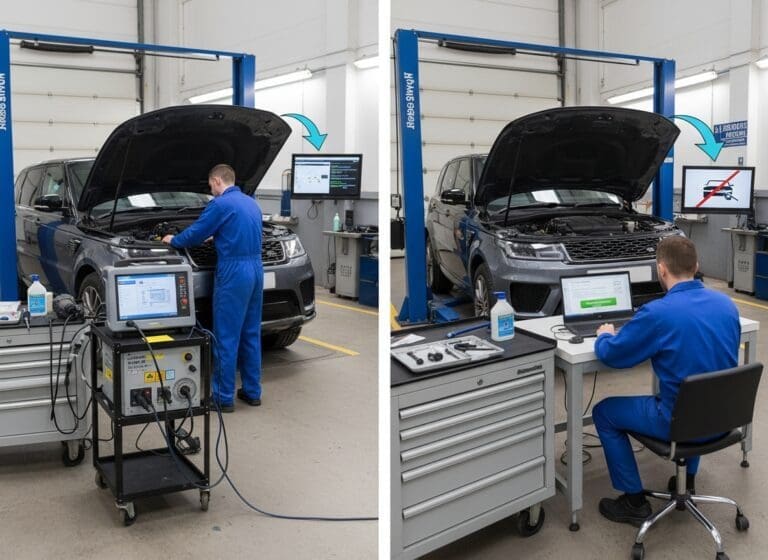
Heavy build-up usually needs parts repaired or replaced, then the system must be validated so warnings do not return.
What AdBlue crystallisation is
AdBlue is a urea and water solution used by the SCR system to reduce NOx emissions.
When small amounts of AdBlue sit on hot exhaust parts or get left in fittings and dry out, it can form hard, white crystals.
They restrict flow.
They distort spray patterns.
They cause pressure and dosing errors.
That leads to warning lights, limp behaviour on some vehicles, and sometimes a no-start countdown.
Symptoms you’ll notice
Common driver symptoms
- AdBlue warning light or “engine fault” message
- Repeated top-ups with no lasting improvement
- Countdown message on some setups
- Poor fuel economy if the engine stays in a protective mode
- Strong ammonia smell near the exhaust area
Root cause matters
What you might see
- White, chalky deposits around the injector or mixer
- Crystals around AdBlue line fittings
- Crust build-up on the exhaust section where dosing happens
- Wet marks that dry into white residue
Are you seeing crystallisation because a part is leaking, or because the injector is not atomising correctly?
Where crystals form on Ford systems
On many Ford diesels, the most common crystallisation spots are:
- The AdBlue injector (poor spray pattern and “dribbling” dries into crystals)
- The mixer / dosing pipe (crystals build where AdBlue hits hot metal)
- Line fittings (minor leaks that dry out)
- SCR catalyst inlet area (build-up affects flow and dosing efficiency)
If you’re unsure which component is failing, start here:
AdBlue repair common faults
Why Ford AdBlue crystallisation happens
Typical causes
- Injector spray pattern issues (mist becomes dribble)
- Small leaks at line connections
- Low-quality or contaminated AdBlue
- Short trips that never stabilise temperatures
- SCR system dosing too often due to sensor errors
What makes it worse
- Leaving a known leak for weeks
- Ignoring early warning lights
- Repeated “quick resets” without fixing faults
- Mixing old fluid with unknown fluid
- Driving patterns that prevent proper SCR operation
Cleaning options (what’s realistic)
People search “AdBlue crystallisation cleaning” because they want an affordable fix.
The honest answer: cleaning can work, but only when the build-up is light and the underlying cause is dealt with.
Option 1: Clean light deposits and reseal fittings
- Best for: minor external crystals from a small seep
- What’s done: clean residue, fix the leak, confirm pressure holds
- Risk: if injector spray is bad, crystals return quickly
Option 2: Injector and mixer cleaning
- Best for: early build-up affecting spray and mixing
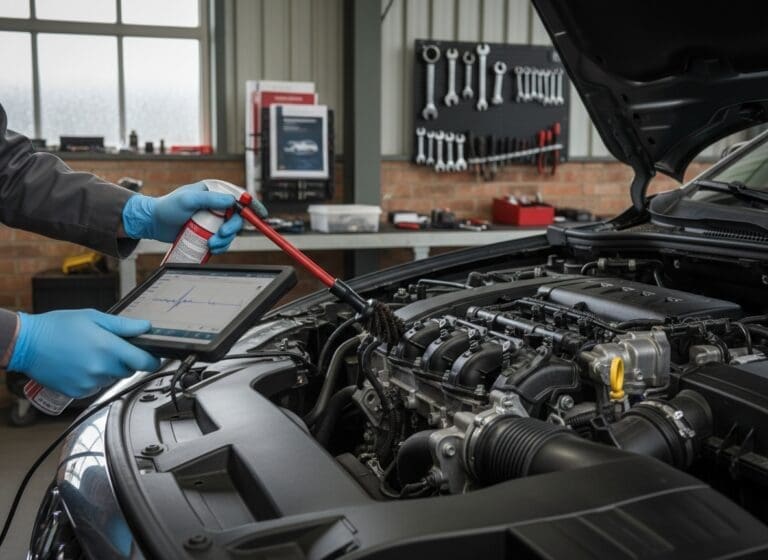
- What’s done: remove, clean, inspect, confirm spray behaviour where possible
- Risk: heavy crystallisation can damage parts or block internal passages
Option 3: Replace failed components
- Best for: heavy crystals, distorted injector tip, repeated dosing faults
- What’s done: replace the parts that can’t be restored, then validate with diagnostics
- Result: most reliable route when faults keep returning
Pour-in “fixes” that promise to dissolve crystals without any checks.
If the injector is leaking or spraying badly, crystals will form again.
Checks that stop repeat faults
This is the part most quick fixes skip. It’s also the part that prevents the same warning coming back.
What we check first
- Fault code scan plus freeze frame data
- SCR dosing requests and conditions
- NOx sensor readings plausibility
- AdBlue pressure behaviour
- Evidence of leaks at line connections
What the results tell you
- Crystals are a symptom, not always the cause
- Sensor errors can make dosing run “wrong”
- Pressure issues can cause poor atomisation
- A leak can be enough to create constant build-up
Watch GSC for uplift on “AdBlue crystallisation” queries.
Success looks like higher impressions and improved CTR within 14–28 days, then position movement as the page settles.
Prevention steps
What you can do
- Use sealed, correct-spec AdBlue
- Keep the filler area clean to avoid contamination
- Fix small leaks early
- Avoid repeated top-ups with unknown fluid
- Do not ignore early SCR warnings
What helps long-term
- Ensure sensors read correctly (NOx and quality)
- Confirm dosing operates in the right windows
- Fix comms faults fast before they create “false dosing” cycles
- Get a proper diagnostic plan before spending on parts
Catching crystallisation early can save downtime.
A small leak today becomes a blocked injector and a no-start risk later.
Internal links
Ford showing AdBlue warnings or crystals?
We can identify whether it’s a leak, injector issue, pressure problem, or sensor fault.
Then we fix it and validate the system so it stays fixed.
Based in Hanley. Serving Stoke-on-Trent, Staffordshire, the Moorlands, and Cheshire East.
Related services
Ford AdBlue Crystallisation FAQs
Can I just scrape the crystals off and keep driving?
You can remove visible residue, but you still need to fix the reason it formed. If it’s a leak or injector issue, crystals will return quickly.
Does AdBlue crystallisation mean the pump has failed?
Not always. Crystals often come from leaks or injector spray issues. Pump or pressure faults can contribute, but you need diagnostics to confirm.
Will topping up AdBlue stop crystallisation?
No. Topping up only addresses low level. Crystallisation is usually a dosing, leak, or hardware issue.
What’s the fastest way to prevent crystals coming back?
Fix leaks, confirm injector operation, and make sure sensors and pressure readings are correct. Then validate the system so it stops triggering repeat dosing faults.
Can crystallisation cause a no-start countdown?
Yes. If dosing becomes unreliable, the SCR system may log faults that trigger countdown behaviour on some vehicles.