If your car has an EGR fault, one of the first questions you may ask is simple. Can you reset the EGR valve without replacing it? The honest answer is yes, sometimes a reset can clear a code or help after certain work. But a reset does not repair a stuck valve, heavy carbon build-up, wiring fault, or wider issue that keeps bringing the same warning back. This guide explains when a reset may help, when it will not, and when the smarter move is proper diagnosis.
Hanley, Stoke-on-Trent
EGR and fault code support
Can you reset an EGR valve without replacing it?
Table of Contents
ToggleThat is the part many drivers miss. A reset sounds like a fix because the warning light may disappear for a short time. But a reset only changes what the vehicle is showing you. It does not change the condition of the part.
If the EGR valve is dirty, jammed, slow to move, or failing to respond as the ECU expects, the fault will usually come back. That is why internet searches about EGR resets often end in frustration. The car seems better for a day, a week, or a few journeys, then the same light returns.
So the useful question is not only whether the valve can be reset. The useful question is why the EGR fault appeared in the first place.
What does an EGR reset actually do?
An EGR reset can mean a few different things depending on the vehicle and the way the fault is being handled.
In simple terms, a reset may involve:
- clearing fault codes after diagnostics
- resetting learned values after fitting or cleaning parts
- running a basic adaptation procedure where the system supports it
- checking whether the valve responds properly after work has been done
What it does not do is reverse carbon build-up, repair worn components, or sort electrical issues by magic. If the valve cannot move freely, if the motor is weak, or if the readings do not make sense, the ECU will often see the same problem again.
That is why some resets help after repair or cleaning, while others only delay the next warning.
When a reset may actually help
There are cases where resetting the EGR valve without replacing it makes sense.
A reset may help when:
- the fault code appeared after a temporary issue
- the valve has been cleaned and now moves correctly
- related work has already been done and the ECU needs the fault memory cleared
- a learned position or response needs checking after repair
- the fault was triggered by a one-off event rather than a failed part
In these cases, the reset is not acting alone. It is part of a wider process. The difference matters. If the mechanical or electrical issue has already been dealt with, a reset can be the final step that helps the system return to normal.
That is very different from using a reset as a shortcut because you hope it will stop the warning without any real repair work.
When a reset will not fix the problem
This is where most wasted time and money happens. A reset will not fix an EGR problem if the fault is still physically there.
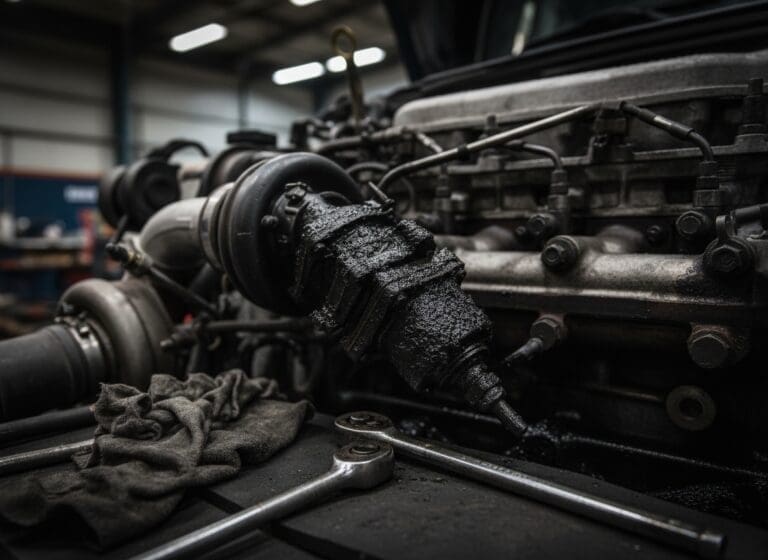
Heavy carbon build-up
If the valve is restricted by soot and carbon, clearing the code does not remove the deposits.
Sticking or jammed movement
If the valve cannot open or close properly, the ECU will usually see the same issue again.
Electrical or motor faults
If the actuator, motor, or internal electronics are failing, a reset will not repair them.
Wiring or signal problems
If the valve is not being controlled or read properly, the warning can return even after clearing.
That is why many drivers clear the light and think they have won, only for the same symptoms to come back. The code was only the messenger. The part or system is still in the same condition.
Common signs your EGR issue needs more than a reset
If you are not sure whether a reset is enough, look at how the vehicle is behaving.
Signs the fault may need proper diagnosis or repair include:
- engine management light returning quickly after being cleared
- poor throttle response
- flat acceleration or low power
- rough idle
- excess smoke on some diesel vehicles
- hesitation under load
- repeat EGR-related fault codes
- a car that feels better for a short time, then drops back into the same pattern
These symptoms usually tell you there is something active behind the code. It may still be fixable without replacing the valve, but the key point is that the system needs checking properly. Simply clearing the warning is unlikely to be enough.
Can cleaning the EGR valve remove the need for replacement?
Sometimes yes. Sometimes no.
If the main issue is carbon build-up and the valve itself is still healthy, cleaning can make a real difference. That is one reason people often ask about resets and replacements together. They want to know if cleaning plus a reset can save the cost of a new part.
That can happen. But it depends on the condition of the valve.
If the valve is only dirty, cleaning may help restore normal movement. If the valve is worn, damaged, slow to respond, or failing electrically, cleaning may not be enough. In that case, clearing the code after cleaning may give only a short improvement or none at all.
This is why a good diagnosis matters. It helps separate a dirty part from a failed one.
Why EGR faults often get misread
EGR problems are easy to oversimplify. Drivers often hear “EGR fault” and assume the valve itself must be dead. In some cases, that is true. In plenty of others, the picture is wider.
An EGR-related issue can involve:
- the valve sticking because of carbon build-up
- the valve moving too slowly
- the valve position not matching what the ECU expects
- a wiring or connector issue
- airflow or related system behaviour causing the fault logic to trip
- a fault that keeps returning because the root cause was never properly checked
This is where part-swapping becomes expensive. If you replace the valve without proving the cause, you can still end up with the same warning light and the same poor running. On the other hand, if you only clear the fault without checking the part, you can waste time in the opposite direction.
The better route sits between those two extremes. Find the cause first. Then decide whether cleaning, repair work, reset, or replacement is the right path.
EGR reset vs EGR repair: what is the real difference?
This is the key comparison behind the search.
| Approach | What it does | When it may help | When it is not enough |
|---|---|---|---|
| EGR reset | Clears codes or resets learned behaviour after checks or work | After a valid repair, clean, or one-off issue | When the valve or system fault is still active |
| EGR clean | Removes carbon build-up where possible | When contamination is the main issue | When the valve is worn, damaged, or electrically faulty |
| EGR repair or replacement | Deals with failed or badly affected components | When the valve cannot operate as it should | When the wider cause has not been checked |
| Proper diagnosis | Identifies what is actually wrong before action is taken | At the start of the process | Only fails if skipped |
This is why the best answer is rarely “always reset it” or “always replace it”. The right answer depends on the condition of the valve and the wider fault pattern.
Should you keep driving after resetting an EGR valve?
That depends on what the reset was for and how the vehicle behaves afterwards.
If the fault was a one-off and the car runs normally after proper checks, you may be fine. But if the same warning returns, the engine still feels flat, or the car hesitates under load, the reset has not solved the root issue.
Driving on with an unresolved EGR fault can lead to ongoing poor running, repeat warning lights, and more frustration than the original problem. It may also make diagnosis harder later if the fault pattern gets more mixed.
That is especially true if the vehicle is already showing strong symptoms rather than only a light on the dash.
What should be checked before replacing the EGR valve?
If you want to avoid unnecessary spend, it helps to work through the basics properly first.
- Read the exact fault code pattern
Do not work from a guess or a generic warning alone. - Check the symptoms
Is it only a light, or do you also have low power, hesitation, smoke, or rough idle? - Assess whether carbon build-up is likely
This can point towards cleaning rather than instant replacement. - Check whether the fault returns after clearing
A fast return usually tells you the issue is still active. - Look at the system, not only the part
The valve may not be the only reason the fault is present.
This is exactly where a service-led diagnostic route helps. Pro Remapping is positioned around specialist fault solving, EGR support, and diagnostics rather than broad garage guesswork. The approved source files make clear that the site supports EGR solutions and fault-code investigation as live themes. :contentReference[oaicite:3]{index=3} :contentReference[oaicite:4]{index=4}
When should you book proper EGR diagnosis?
You should stop relying on resets and book proper help when:
- the fault keeps returning
- the car is clearly not driving as it should
- you have already cleaned or cleared the issue once
- you are about to buy a new part but are not sure the valve is the true cause
- you want a repair route based on evidence rather than trial and error
This is the point where online advice usually runs out. Forum threads can tell you what happened on someone else’s car. They cannot tell you what is wrong with yours.
If you are in Stoke-on-Trent or the wider Staffordshire area, the sensible next step is to move from research into a service page that matches the issue. For EGR-related queries, that means the live EGR Solutions page, backed by diagnostics and local service support.
Final answer: reset or replace?
You can reset an EGR valve without replacing it. That part is true. But the better question is whether a reset is enough for your car.
If the fault was temporary, the valve has already been cleaned, or proper work has been carried out, a reset may be part of the right fix. If the valve is sticking, carboned up, failing electrically, or the same warning keeps returning, a reset on its own is very unlikely to solve the problem.
So the smart route is simple. Do not jump straight to a new part. Do not keep clearing the code and hoping. Find the cause first. Then decide whether the right answer is a reset, a clean, a repair, or a replacement.
Need help with an EGR fault?
If your EGR warning keeps coming back, the car feels flat, or you want the issue checked properly before spending money on parts, contact Pro Remapping. The aim is to narrow the fault down properly and move you towards the right fix, not just clear the light and hope for the best.
Based in Hanley and covering Stoke-on-Trent and wider Staffordshire for EGR faults, diagnostics, remapping, AdBlue issues, and DPF-related support.
FAQs
Can an EGR valve be reset without replacing it?
Yes, sometimes. But a reset only helps if the underlying problem has already been dealt with or the fault was temporary.
Will clearing the EGR code fix the problem?
No. It may remove the warning for a while, but if the cause is still there the code will usually return.
Can cleaning the EGR valve stop me needing a new one?
Sometimes. If the main issue is carbon build-up and the valve is still healthy, cleaning may help. If the valve is worn or faulty, cleaning may not be enough.
What symptoms point to a real EGR problem?
Low power, hesitation, rough idle, repeat warning lights, and a fault that returns quickly after clearing are all common signs.
Which Pro Remapping page should I check next?
Start with the EGR Solutions page if you want the service-led next step for diagnosis and fault support.