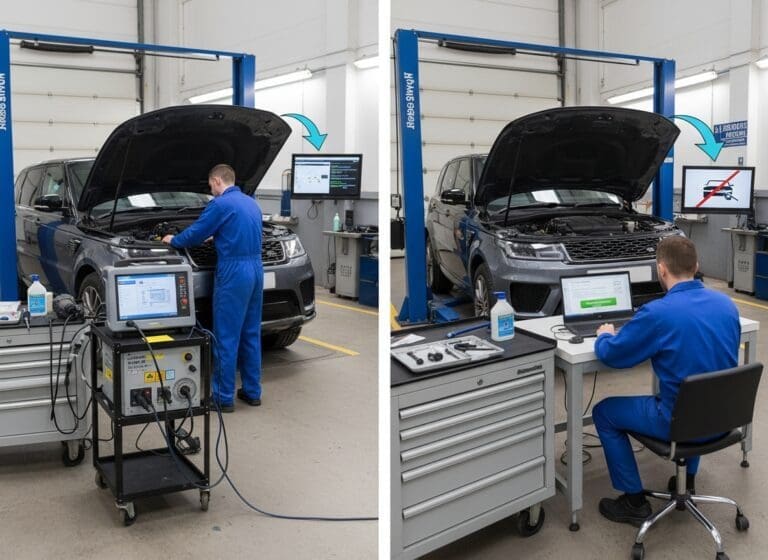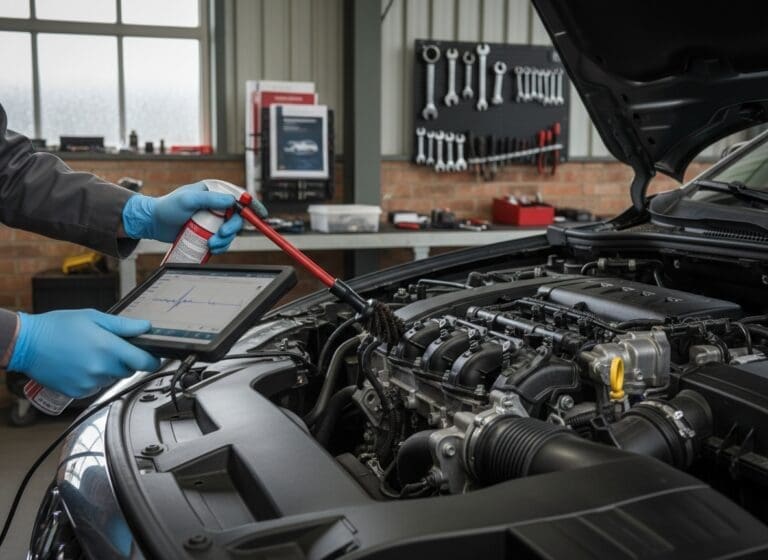
Your car won’t start because of an AdBlue warning or countdown?
Many modern diesel vehicles will prevent the engine from starting if the SCR emissions system detects a fault or the AdBlue tank runs empty.
Drivers often see messages like “No start in 500 miles” or “Start not possible” before the ECU locks the engine completely.
This guide explains why AdBlue faults trigger a no-start condition, what the countdown means, and the steps you can take to restore normal operation.
If an AdBlue system fault triggers a countdown, the ECU may prevent the engine from starting once the limit is reached. Resetting the SCR system or repairing the underlying fault restores normal operation.
Why an AdBlue Fault Stops Your Car Starting
Table of Contents
ToggleModern diesel vehicles use a system called SCR (Selective Catalytic Reduction) to reduce harmful nitrogen oxide emissions.
The system injects AdBlue fluid into the exhaust where it reacts with NOx gases and converts them into nitrogen and water vapour.
If the ECU detects a problem with this process, emissions regulations require the vehicle to limit operation. That is why many cars display a countdown warning before preventing the engine from starting.
Common messages include:
- AdBlue system fault
- Start not possible in X miles
- No engine restart after countdown
- SCR system malfunction
Once the countdown reaches zero, the ECU may disable the starter until the underlying fault is fixed.
1. Check the AdBlue Level First
The most common cause of a no-start AdBlue warning is simply an empty tank.
Check the fluid level before assuming the system has failed.
- Park the vehicle on level ground
- Locate the AdBlue filler cap (often next to the diesel cap or under the bonnet)
- Check the dashboard level indicator
- Look for “low AdBlue” warnings
If the tank is empty, refill using certified ISO-22241 AdBlue fluid. Never mix diesel or water with AdBlue as contamination can damage the SCR system.
2. Refill the Tank Correctly
When refilling AdBlue, follow these simple steps:
- Wear gloves to avoid skin irritation
- Use sealed AdBlue containers to avoid contamination
- Fill the tank until the system detects sufficient fluid
- Start the engine and allow the ECU to update the level reading
Some vehicles require several minutes of driving before the warning clears.
3. Understand the AdBlue Countdown Warning
When the SCR system detects an issue, the ECU often triggers a mileage countdown.
This warning is designed to give the driver time to repair the fault before the system disables engine starting.
For example:
- 1000 mile countdown – early SCR efficiency warning
- 500 mile countdown – confirmed system fault
- 0 miles – engine restart disabled
If your vehicle already shows a countdown warning, follow a proper reset procedure or repair the underlying issue before the limit reaches zero.
Mercedes vehicles are well known for this behaviour. You can read our detailed Mercedes AdBlue countdown reset guide for model-specific fixes.
4. Reset the SCR / AdBlue System
After topping up the fluid, some vehicles need a system reset before the ECU clears the warning.
Common reset methods include:
- Turning ignition on for several minutes without starting
- Driving the vehicle for 10–20 minutes
- Performing an OBD diagnostic reset
If the system does not reset automatically, a diagnostic scan tool may be required to clear the stored fault codes.
5. Look for AdBlue Crystallisation
AdBlue fluid can crystallise inside pipes and injectors if the vehicle sits unused or operates in cold conditions.
This crystal build-up can block the dosing injector and trigger SCR faults.
Common symptoms include:
- Repeated AdBlue warnings after refilling
- White crystal residue near pipes or injectors
- SCR efficiency codes such as P20EE
We explain the issue in detail in our guide to Ford AdBlue crystallisation symptoms and prevention .
6. Scan the Vehicle for Fault Codes
If refilling the tank does not resolve the problem, the next step is to scan the ECU for diagnostic codes.
Common AdBlue-related fault codes include:
- P20EE – SCR efficiency below threshold
- P204F – Reductant system performance
- P20E8 – AdBlue pressure too low
These faults usually indicate sensor, injector, or pump problems inside the SCR system.
Professional diagnostic tools such as CMD Flash and Autotuner systems allow technicians to read live data and confirm which component has failed.
7. When You Need Professional Diagnostics
Some AdBlue faults cannot be fixed by topping up the tank.
Common mechanical problems include:
- Failed NOx sensors
- Blocked AdBlue injectors
- Cracked dosing pipes
- Faulty SCR pump modules
Our workshop in Hanley provides full diagnostic testing for diesel emissions systems.
We identify the exact fault, repair the system, and confirm the vehicle will pass its next MOT emissions test.
Prevent AdBlue Problems in the Future
You can reduce the risk of SCR faults with simple maintenance:
- Refill AdBlue before the tank runs empty
- Store fluid in sealed containers away from heat
- Drive regularly to prevent crystallisation
- Scan the vehicle annually for emissions faults
Many drivers only notice problems once the countdown warning appears, but early diagnostics can prevent expensive SCR repairs.
Related Diesel Diagnostics
AdBlue No-Start Checklist
| Step | Action |
|---|---|
| 1 | Check AdBlue fluid level |
| 2 | Refill tank using certified AdBlue |
| 3 | Allow ECU to detect the new fluid level |
| 4 | Reset SCR system if required |
| 5 | Scan for diagnostic fault codes |
| 6 | Repair sensor, injector or pump faults |
If your vehicle still refuses to start after an AdBlue warning, the SCR system may require diagnostic testing.
Call us on 074040 22260 to book an AdBlue system check at our Hanley workshop.