Pro Remapping — Stoke-on-Trent & Staffordshire
Swirl Flap Delete UK: What It Is, Why Diesels Fail, and Whether It’s Worth It
The hidden engine risk affecting BMW, VW, Ford and Peugeot diesels — and the preventive fix that could save you thousands.
BMW stopped fitting swirl flaps to their diesel engines after 2008. They did it for a reason: the originals were catastrophically unreliable. When swirl flap spindles corrode or the plastic actuator arms fatigue, fragments break into the intake manifold and get pulled straight into the combustion chamber — at up to 4,000 rpm, ingested metal pieces cause instant, irreversible engine damage. Burch Motor Works describes it plainly: the repair bill for a post-swirl-flap-failure engine rebuild regularly runs into five figures.
The problem is not limited to BMWs. VW and Audi 1.6 and 2.0 TDI common-rail engines, early Ford 2.0 TDCi units, and Peugeot/Citroen HDi engines all use intake manifold swirl flaps — and all carry the same ingestion risk as mileage accumulates.
What Are Swirl Flaps and What Do They Do?
Swirl flaps are small butterfly valves positioned inside the inlet manifold, one per cylinder. When the engine is cold or running at low loads, they partially restrict airflow to create turbulence — the “swirl” — which helps mix fuel and air more efficiently, improving cold-start combustion and reducing emissions at light throttle.

The trade-off is mechanical complexity in a hot, oil-vapour-laden environment. The spindles and actuator linkages corrode, the plastic retaining screws fatigue, and after 80,000–120,000 miles on many engines, failure is not a question of if — it’s when.
Signs Swirl Flaps Are Failing
- Fault code P2015 (intake manifold flap position sensor)
- Rattling or ticking from the intake at idle
- Loss of power at low revs
- Engine management light on
- Rough cold start
Vehicles Commonly Affected
- BMW 1, 3, 5, 7 Series diesel (2000–2008)
- VW/Audi 1.6 & 2.0 TDI (PD and common-rail)
- Ford Transit & Focus 2.0 TDCi (pre-2012)
- Peugeot/Citroen 2.0 HDi
- SEAT, Skoda 2.0 TDI variants
What Does Swirl Flap Delete Actually Involve?
A proper swirl flap delete has two components. The physical part involves removing the intake manifold and fitting blanking plates — machined aluminium plugs that seal off the flap ports permanently. Some kits use solid aluminium pieces; others use threaded inserts for additional security. The manifold is refitted, leak-tested, and cleaned of any debris.
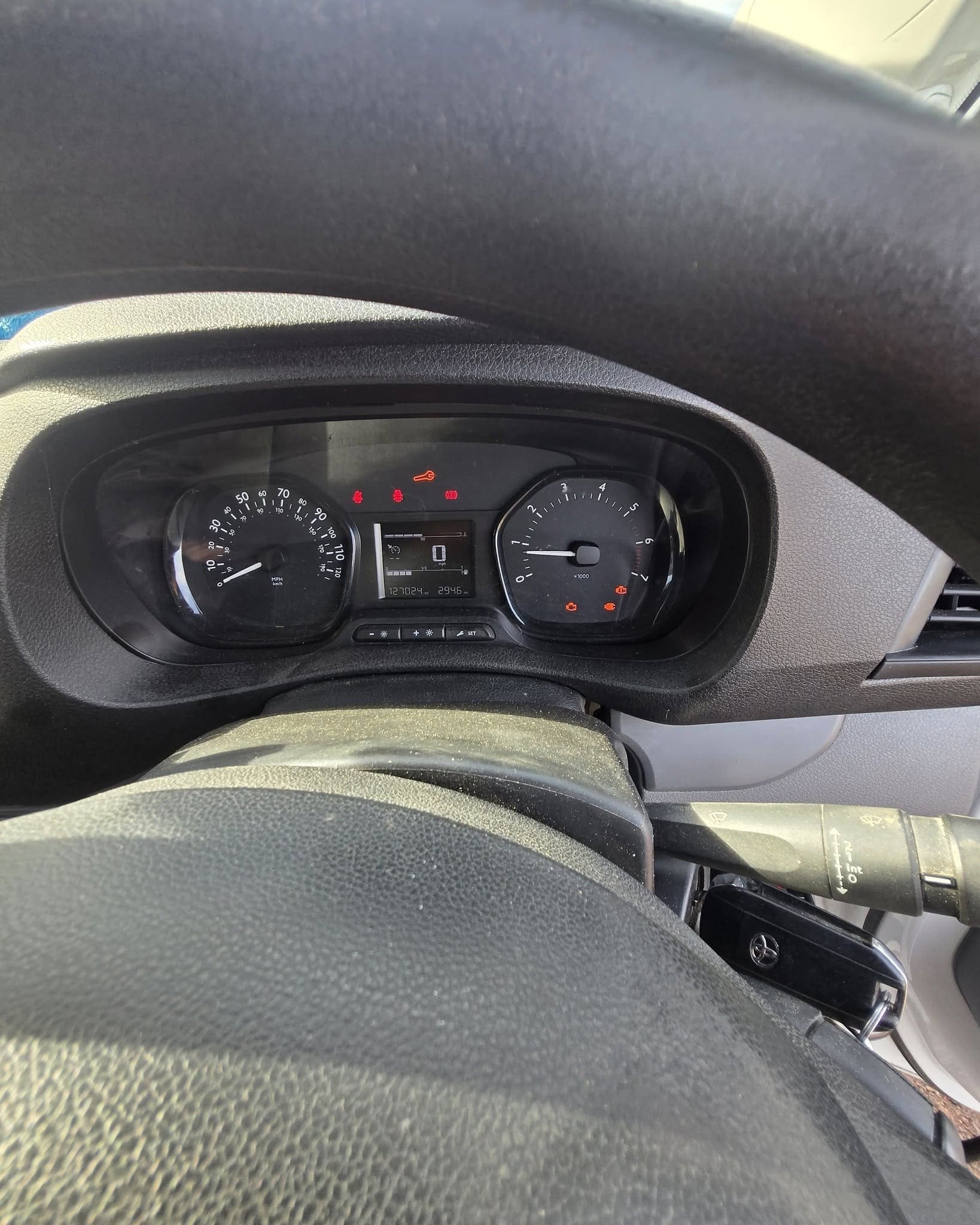
The second component is the ECU software update. Without it, the ECU still expects position feedback from the swirl flap actuator, generating fault codes and potentially putting the engine into a reduced-power mode. A proper recalibration removes the swirl flap mapping from the ECU so the car runs normally with no fault codes, no warning lights, and no power loss.
At Pro Remapping in Stoke-on-Trent, swirl flap delete is handled as part of our broader diesel delete and diagnostics service — same principle as EGR delete: remove a failure-prone emissions component, recalibrate the ECU, restore clean operation.
Is Swirl Flap Delete Legal in the UK?
Yes. Swirl flap delete is legal in the UK for road use. Unlike DPF removal, which is a specific MOT failure point under DVSA emissions guidance, swirl flaps have no equivalent legal protection. There is no regulation requiring them to be present, and the MOT tailpipe emissions test does not check for their presence.
Your vehicle will pass its MOT with swirl flaps deleted, provided exhaust emissions remain within limits. In practice, removing the flaps does not change exhaust emissions in any measurable way on a well-maintained diesel engine.
How Much Does Swirl Flap Delete Cost in the UK?
| Service Level | What’s Included | Typical UK Cost |
|---|---|---|
| Parts only (DIY) | Blanking plate kit only | £20–£80 |
| Physical delete only | Plates fitted, no ECU work | £100–£180 |
| Full delete + ECU remap | Plates + software recalibration + fault code clear | £200–£350 |
The full service is the only version worth doing. A half-finished delete where the ECU still throws swirl flap codes can trigger limp mode — which defeats the entire point.
Does It Affect Performance or Fuel Economy?
On a healthy engine, the difference in normal driving is imperceptible. Swirl flaps contribute to low-rev turbulence and cold-start combustion quality — but at the temperatures, loads, and rev ranges most road cars spend their lives at, a well-tuned ECU compensates without issue. Performance tuners including Darkside Developments have fitted swirl flap deletes on thousands of VW TDI builds without any documented fuel economy penalty.
Where drivers notice an improvement is in cold idle quality — the engine tends to run smoother at startup once the faulty actuator chatter is eliminated — and in peace of mind that the intake manifold isn’t going to shed metal into the engine.
If you’re also dealing with turbo boost problems or power loss alongside swirl flap issues, it’s worth having a full diagnostic first — the two can coexist and have different root causes.
Should You Delete Proactively or Wait for a Fault?
This is where most of the debate sits. Our recommendation: proactively at the 80,000–100,000 mile mark on a BMW diesel or VW/Audi TDI, especially if you’ve never had the intake manifold off. Waiting for the fault code (P2015) to appear means you’re already at the point of mechanical wear. Waiting for the rattle or the smoke means fragments may already be moving.
For vehicles bought second-hand above 70,000 miles with no service history confirming the intake was ever inspected — a proactive delete is one of the highest-value preventive maintenance jobs available.
Swirl Flap Delete at Pro Remapping — Stoke-on-Trent
We carry out swirl flap delete with full ECU recalibration for BMW, VW, Audi, SEAT, Skoda, Ford, and PSA group diesels from our workshop in Stoke-on-Trent. The job includes manifold removal, blanking plate fitment, software update, and a post-work OBD scan to confirm a completely clean system. We also offer engine carbon cleaning as an add-on if the intake shows significant deposit build-up at inspection.
Swirl Flap Delete — Stoke-on-Trent
Call or message us for a free quote on swirl flap delete and ECU recalibration for your diesel.
Workshop location:
201 King Street, Fenton, Stoke-on-Trent, ST4 3ER
Swirl Flap Delete — Frequently Asked Questions
Is swirl flap delete legal in the UK?
Yes. There is no UK regulation requiring diesel engines to retain swirl flaps. Removing them does not affect tailpipe emissions in a way that causes MOT failure, and no DVSA guidance prohibits it. It is a legal modification for road-going vehicles.
What happens if swirl flaps fail?
When swirl flap spindles corrode or actuator arms break, fragments can be ingested into the combustion chamber at engine speed. This causes catastrophic internal damage — bent connecting rods, damaged pistons, scored cylinder walls — that typically requires a full engine rebuild or replacement at a cost of £3,000–£8,000 or more.
Will swirl flap delete affect my MOT?
No. The UK MOT test does not check for the presence or absence of swirl flaps. It tests exhaust emissions at the tailpipe. Swirl flap deletion does not measurably increase harmful exhaust emissions, so properly completed delete work does not cause MOT failure.
How much does swirl flap delete cost in the UK?
A full swirl flap delete including blanking plates and ECU recalibration typically costs £200–£350 at a UK specialist. Parts-only kits for DIY fitment start from £20–£80, but without the ECU update, fault codes remain active and the car may enter limp mode.
Written by the Pro Remapping Diagnostics Team · Published 10 September 2026 · 201 King Street, Fenton, Stoke-on-Trent, ST4 3ER · Pro Remapping is an independent ECU remapping and diagnostics specialist serving Stoke-on-Trent, Staffordshire, and the wider West Midlands.