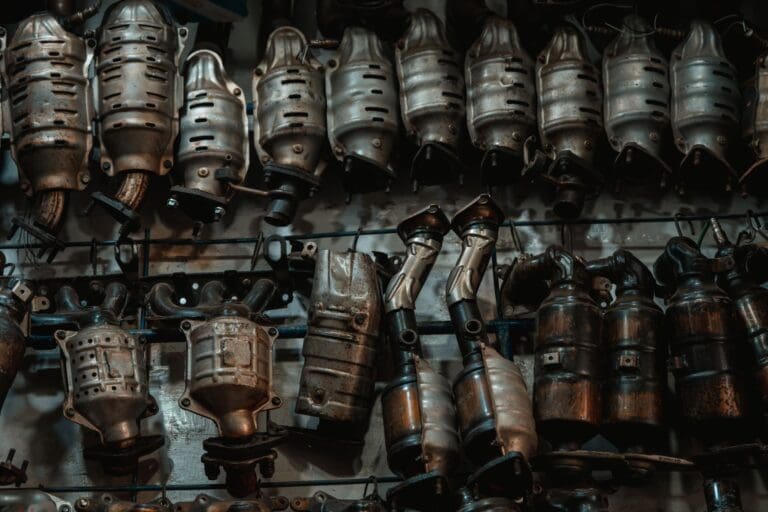
A blocked DPF rarely fails without warning. The car usually tells you first: a warning light, a loss of power, a fan that keeps running after you switch off. Here are the signs to look for, what they mean, and what to do next.
Quick answer: the most common blocked DPF symptoms are a DPF or engine warning light, reduced power or limp mode, regenerations that happen more often than usual, worse fuel economy, and rough running. If the light stays on after a steady 20–30 minute drive, or the car goes into limp mode, get it diagnosed before driving much further. A filter that is caught early can usually be cleaned rather than replaced.
What a DPF does, and why it blocks
The diesel particulate filter (DPF) sits in the exhaust and traps the soot your engine produces. It can only hold so much, so the car burns the soot off from time to time in a process called regeneration. On a steady run the exhaust gets hot enough to do this on its own (passive regeneration). When it doesn’t, the engine management raises the exhaust temperature deliberately (active regeneration).
A DPF blocks when soot builds up faster than the car can burn it off. That usually comes down to the way the car is driven, a fault elsewhere on the engine, or, at high mileage, ash: the unburnable residue from engine oil that no regeneration can remove. Our guide to active, passive and forced regeneration explains the process in more detail.
The most common blocked DPF symptoms
1. A DPF or engine warning light
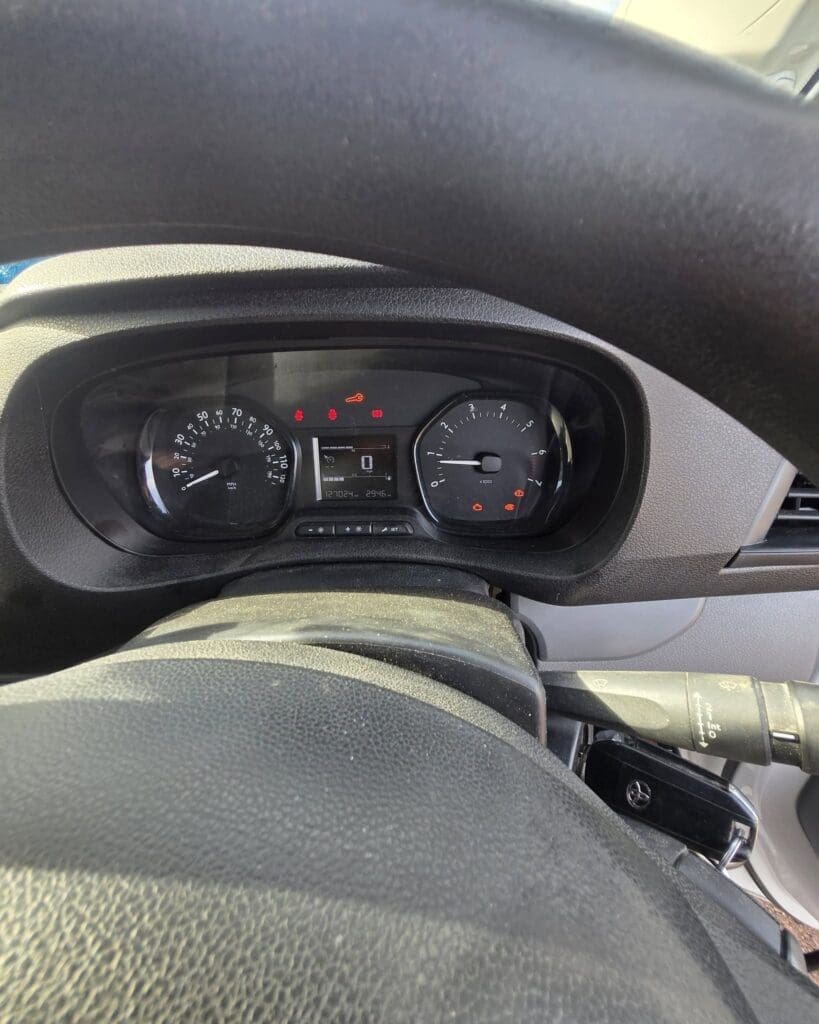
This is the clearest sign. Most diesels have a dedicated DPF light, and many will also show the engine management light once the soot load gets high. A DPF light that comes on and then clears after a longer drive usually means a regeneration was needed and completed. A light that stays on, flashes, or comes back within days means the filter isn’t clearing.
2. Loss of power or limp mode
A restricted filter makes it harder for exhaust gas to escape. The engine feels flat, especially when pulling away or climbing a hill. If the restriction gets bad enough, the ECU limits power to protect the engine and turbo. That is limp mode, and it is a sign to stop and get the car checked rather than keep driving. See what causes limp mode for the other common triggers.
3. Regenerations happening more often
You may notice the signs of an active regeneration more than you used to: the cooling fan running after you switch off, a higher idle, a hot smell from the exhaust, or the stop-start system not working. If regenerations keep starting but never finish, often because the trips are too short, the soot load keeps climbing.
4. Worse fuel economy
Every active regeneration uses extra fuel, and a restricted exhaust makes the engine work harder. A noticeable drop in miles per gallon, with no change in how or where you drive, is often one of the earliest signs.
5. Rough running or juddering
Some cars hesitate, judder or idle unevenly when the filter is heavily loaded. We cover this one separately in can a blocked DPF cause juddering?
6. Difficult starting or stalling
In severe cases the back pressure is high enough to make the engine hard to start, or to stall at idle. By this stage the filter is badly blocked and needs attention straight away.
7. Engine oil level rising
This one is easy to miss. When active regenerations are repeatedly interrupted, some of the extra fuel can wash past the piston rings into the sump. If the dipstick reads higher than it did at the last service, or the oil smells of diesel, get it checked. Diluted oil protects the engine less well and the car may need an oil change as well as attention to the filter.
8. Black smoke? Usually a different problem
A blocked DPF traps soot, so it doesn’t normally cause black smoke at the tailpipe. Black smoke from a car that should have a working filter usually points to a cracked or damaged DPF, or a fuelling or boost problem upstream, such as an injector, a boost leak or the EGR system. It still needs diagnosing, but for a different reason.
Is it the DPF, or something else?
A DPF warning is often the messenger, not the cause. If something upstream is making the engine produce too much soot, or stopping regenerations from finishing, the filter will block again after it has been cleaned. The usual suspects are:
- DPF pressure sensor faults that give the ECU false readings. Our sister company DPF Cleaner explains how to tell a pressure sensor fault from a blocked DPF.
- EGR valve problems that put extra soot into the intake. See EGR valve problems.
- Worn or leaking injectors that over-fuel the engine. See diesel injector fault symptoms.
- Turbo or boost faults, including split boost pipes. See P0299 turbo underboost.
- Glow plugs and thermostats that affect cold running and stop the exhaust reaching regeneration temperature. See glow plug fault symptoms.
Common DPF fault codes
| Code | What it usually means |
|---|---|
| P2002 | DPF efficiency below threshold. See our P2002 guide |
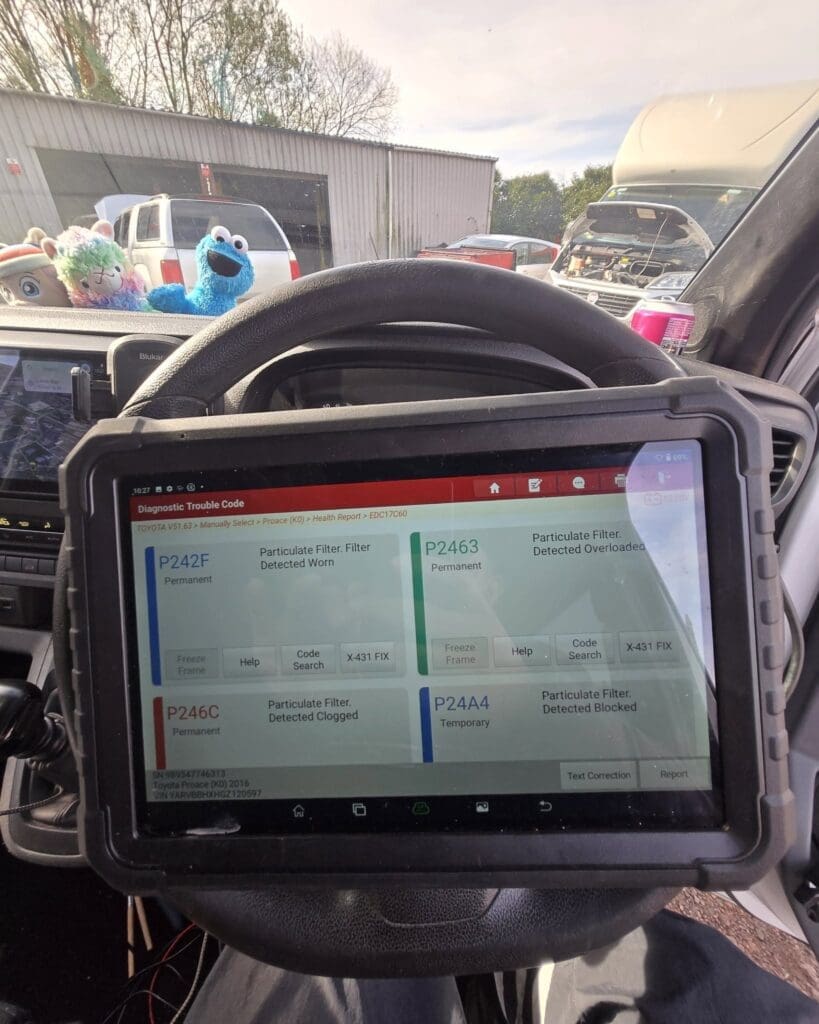
| P2463 | Soot accumulation: the filter is loaded beyond what the car expects |
| P242F | Ash accumulation: residue that regeneration can’t burn off |
| P2452 to P2455 | DPF differential pressure sensor circuit or range faults |
Codes point you in the right direction, but they don’t replace a proper check. Live data showing the soot load, ash estimate, differential pressure and regeneration history is what tells you whether the filter itself is the problem.
What causes a DPF to block
- Short journeys. The exhaust never gets hot enough for long enough to regenerate. Two miles to work and back is the classic case. See why short journeys cause DPF problems.
- Interrupted regenerations. Switching off halfway through a regeneration, again and again.
- Engine faults upstream, as listed above.
- The wrong engine oil. Cars with a DPF need low-SAPS oil to the manufacturer’s specification, otherwise ash builds up faster.
- Oil consumption from worn seals or a tired turbo, which adds ash to the filter.
- High mileage. Even on a healthy engine, ash builds up over time and eventually needs cleaning out.
What to do if you think your DPF is blocked
| What you’re seeing | What to do |
|---|---|
| DPF light has just come on, car drives normally | Check your handbook. Most cars ask for a steady 20–30 minute drive at a constant speed so a regeneration can finish. |
| Light stays on after a long drive, or keeps coming back | Book diagnostics. A forced regeneration with a diagnostic tool may clear it if the filter isn’t too heavily loaded. |
| Limp mode, flashing light, or more than one warning light | Drive as little as possible and get it checked. Forcing a heavily loaded filter can overheat and crack it. |
| Regeneration fails, or ash load is high | A professional clean, either on the vehicle or off the vehicle for heavier blockages. |
| Filter cracked or melted | Replacement is the only option. See DPF replacement costs. |
Fuel additives can help keep a healthy filter clean, but they won’t clear a filter that is already blocked or full of ash. DPF Cleaner looks at this in do DPF additive cleaners actually work?
Removing the DPF isn’t a fix for a road car. Since 2014 the MOT fails a vehicle if a DPF fitted by the manufacturer is missing or has obviously been tampered with. Cleaning the filter and fixing whatever blocked it is the reliable route.
How to stop it happening again
- Give the car a steady run of 20–30 minutes at a constant speed every week or two, especially if most of your driving is short trips.
- If you notice a regeneration running (fan on, higher idle), let it finish before you switch off where you can.
- Use oil to the manufacturer’s specification and keep up with servicing.
- Get warning lights, misfires and loss of power looked at early. A small fault left alone is the most common reason a DPF blocks again after it has been cleaned.

Frequently asked questions
Can I keep driving with a blocked DPF?
For a short time, if the car drives normally and only the DPF light is on. A steady run may even clear it. If the car is in limp mode, the light is flashing, or several warning lights are on, drive as little as possible and get it diagnosed, as a badly blocked filter can damage the turbo or crack the filter itself.
Can a blocked DPF clear itself?
A partly loaded filter often can, through a passive or active regeneration on a longer drive. A heavily blocked filter, or one full of ash, won’t clear itself and needs a forced regeneration or a professional clean.
Will a blocked DPF fail the MOT?
It can. An illuminated engine management light is a major defect on its own, and a blocked or faulty filter can also push the smoke test outside limits.
How much does it cost to fix a blocked DPF?
It depends on how badly the filter is blocked and what caused it. A forced regeneration costs far less than cleaning, and cleaning costs far less than replacement. Our DPF cleaning cost guide compares the options.
How long does a DPF last?
On a healthy engine with a good mix of journeys, a DPF can last well over 100,000 miles. Ash builds up over time, so higher-mileage filters often benefit from a professional clean. Filters that fail early almost always do so because of short trips or a fault elsewhere on the engine.
Think your DPF is blocked?
We diagnose the cause before recommending a fix, so you don’t pay for a clean that won’t last. DPF cleaning is carried out at our Fenton workshop in Stoke-on-Trent. Not local? Our sister company DPF Cleaner offers a UK postal cleaning service.
Reviewed and signed off by Pro Remapping: DPF diagnostics, cleaning and diesel repairs at our Fenton workshop, Stoke-on-Trent.