Low-SAPS Engine Oil and Your DPF: Why the Wrong Oil Blocks the Filter
A diesel particulate filter can be quietly destroyed by a service that looked perfectly normal on the invoice. The oil grade is the part nobody checks.
We see the same car two or three times a year. It does proper mileage, it gets serviced on time, the driver has been told to “give it a run up the A500” and has done exactly that — and the filter still loads up faster every few thousand miles. When a diesel behaves like that and the driving pattern genuinely is not the problem, the next thing worth reading is not a fault code. It is the oil spec on the last service invoice.
What is low-SAPS engine oil? Low-SAPS engine oil is oil with reduced sulphated ash, phosphorus and sulphur, sold under the ACEA C grades. Ordinary high-SAPS oil leaves ash behind when it burns, and that ash collects permanently inside a diesel particulate filter. Using a low-SAPS engine oil that matches your DPF-equipped car slows that build-up down dramatically.
That is the whole idea in one paragraph, and it is why the oil aisle went from simple to confusing in about a decade. The rest of this guide covers what the letters mean, what the wrong oil actually does inside the filter, and how to tell whether it has already happened to your car.

What SAPS stands for — and which part blocks the filter
SAPS is an acronym for the three things being limited: Sulphated Ash, Phosphorus and Sulphur. All three are useful in an engine oil. All three cause problems once a vehicle has after-treatment bolted to the exhaust.
The trade explanation is blunt about which one matters most. Sulphated ash is the residue that blocks the DPF when the additives in the oil are burnt, while phosphorus — an anti-wear additive — can poison the catalyst and the petrol particulate filter, and sulphur can contribute to blocking as well.
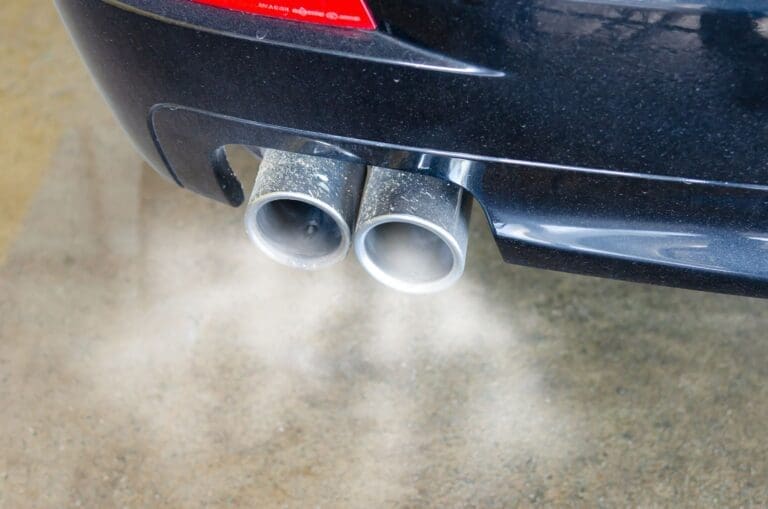
Some oil reaches the combustion chamber on every engine. It is a normal amount, past the rings and the valve stem seals, and it is not a fault. On a pre-DPF diesel it left through the tailpipe and nobody noticed. On a modern one it leaves a small deposit behind every single time.
The bit most guides skip: low-SAPS oil is not a weaker oil. It is the same protection delivered with different additive chemistry, chosen so the residue it leaves behind will not choke the exhaust. You are not trading engine life for filter life.
ACEA C grades: how low-SAPS engine oil is classified
ACEA is the European motor manufacturers’ association, and its oil sequences are the spec most owner’s manuals in the UK point at. The A and B categories were the original petrol and diesel oils. The C categories are the low-SAPS family, created specifically because after-treatment arrived.
The trade press has tracked that history closely: high-SAPS oils such as ACEA A3/B4 were the norm until diesel particulate filters became standard fitment and it was realised that conventional high-SAPS oil can block the DPF. The C family followed, and it has kept growing — C1 was dropped from the 2022 edition of the sequences, while C5 and C6 have since been added.
| Grade | Broadly for | Worth knowing |
|---|---|---|
| ACEA C2 | Many PSA-derived diesels and petrols | Lower-viscosity, fuel-economy oriented. Not interchangeable with C3 on every engine. |
| ACEA C3 | The most common UK spec for German and Japanese diesels | Higher HTHS viscosity. The grade most main-dealer schedules call for. |
| ACEA C4 | Certain Renault and Nissan applications | Lowest ash limits of the older family. |
| ACEA C5 / C6 | Newer low-viscosity applications | Added after the original set. C6 also brings wear and chain-protection requirements. |
Treat that table as orientation, not authority. The number that actually matters is the manufacturer approval printed in your handbook — VW 507 00, BMW LL-04, MB 229.51 and their equivalents sit on top of the ACEA grade and are the ones a dealer schedule is written against.
What the wrong oil does inside the filter
This is where the difference between soot and ash decides whether your DPF has a future.
Soot is temporary. It is unburnt carbon, and the whole regeneration strategy exists to oxidise it. Get the filter hot enough for long enough and the soot leaves as gas. That is what a motorway run is doing for you.
Ash is permanent. Ash is the mineral residue from burnt oil additives. It does not oxidise at any temperature the exhaust will ever reach, so no regeneration removes it. Every regeneration that clears the soot leaves the ash exactly where it was, and the next one starts from a slightly fuller filter.
Run the wrong oil and you are simply loading ash faster. The car keeps regenerating on cue for a long time, which is why the problem hides so well. What changes is the interval: regens that used to be every 400 miles start arriving every 250, then every 150, and eventually the filter cannot hold a useful soot load between them at all.
Our guide to active, passive and forced regeneration explains what the ECU is trying to do at each stage. The short version is that a shrinking gap between regenerations is a capacity problem, and capacity lost to ash does not come back on the road.
The practical test. Ash load is the reason a filter can be “clean” and still finished. If a forced regeneration restores performance for a fortnight and then the light returns, the soot was never the issue.
Four ways drivers end up with the wrong oil
Almost nobody chooses the wrong oil deliberately. It arrives through ordinary decisions.
1. The universal 5W-30
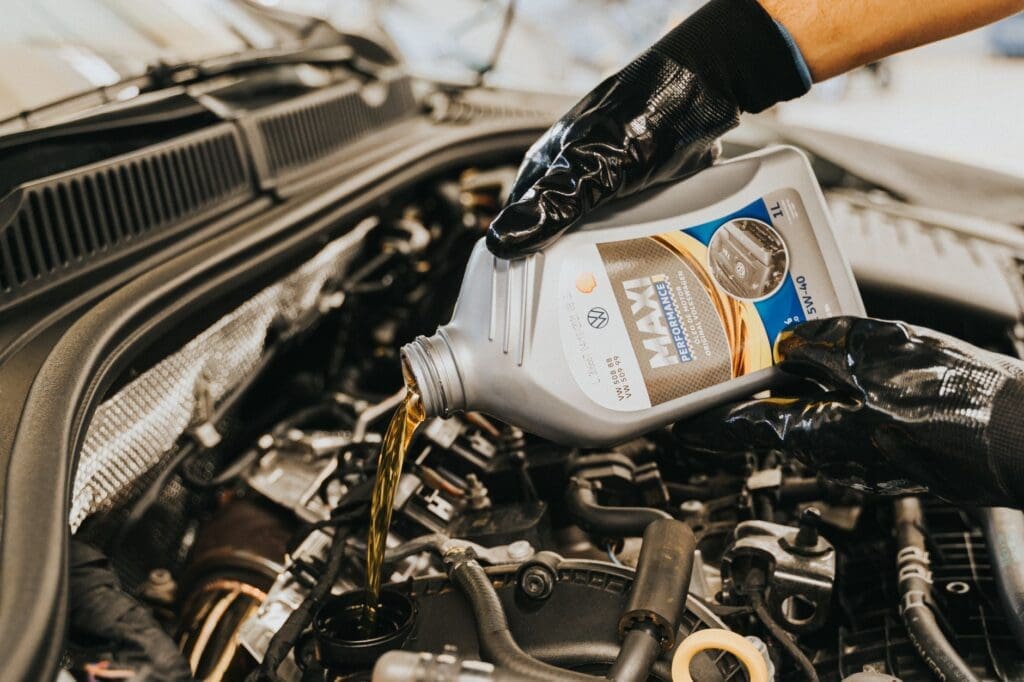
Viscosity is not a specification. Two 5W-30 oils can sit either side of the SAPS line, and a bulk-fill labelled only by viscosity tells you nothing about ash content. A cheap service that quotes a viscosity and no approval is the classic route in.
2. The top-up from the shelf
A litre of whatever was in the garage, added twice a year, is a slow-motion version of the same problem. On an engine that uses oil between services, the top-up bottle can end up being a meaningful share of what is in the sump.
3. Fuel dilution from failed regens
Active regeneration injects extra fuel late in the cycle. Interrupt enough of them on short journeys and diesel ends up in the sump, thinning the oil and pushing more of it past the rings. A DPF problem quietly becomes an oil problem, which then becomes a worse DPF problem.
4. Extended service intervals
Long-life schedules assume the correct long-life oil. Running a standard oil to a long-life interval is the combination that does the most damage in the shortest time, and it is common on used cars bought part-way through their life.
The fuel-dilution one is worth dwelling on if your car does mostly short trips. It is the reason we treat short-journey driving patterns and oil condition as one problem rather than two.
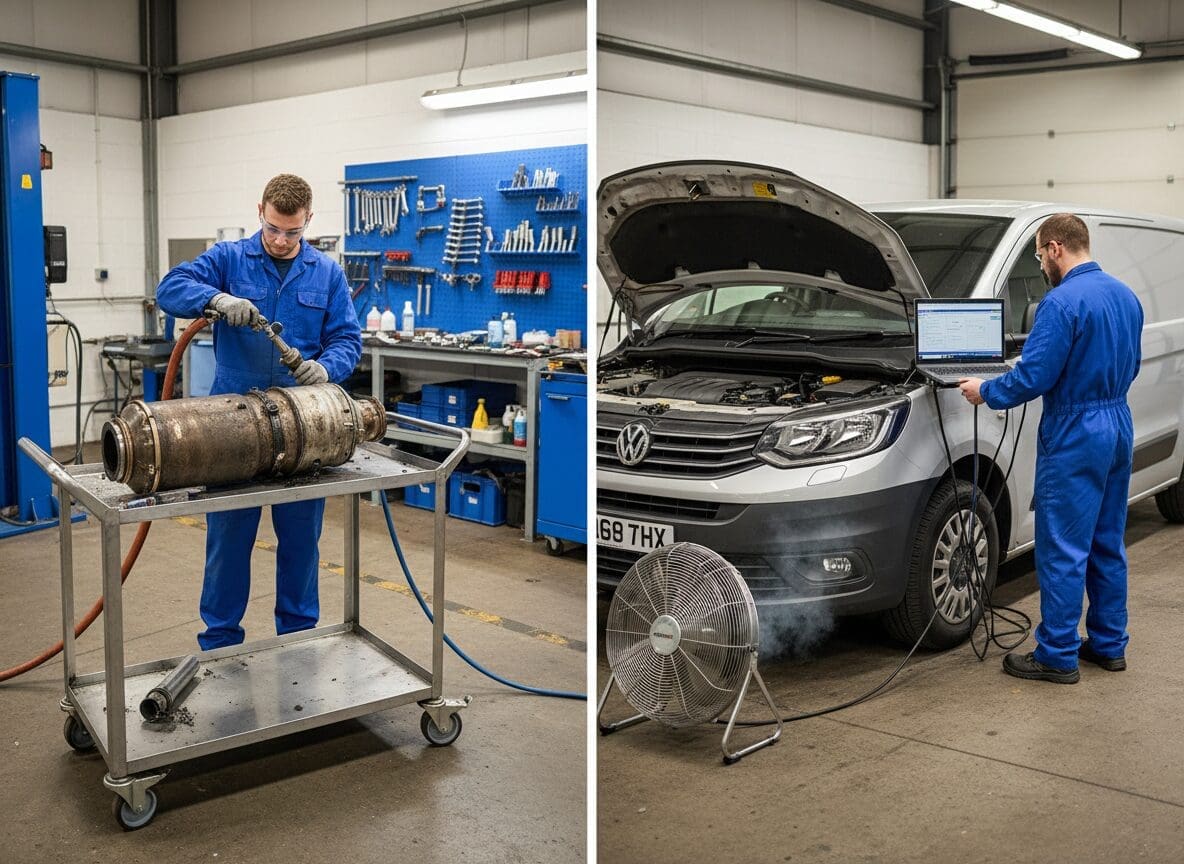
What we check on a car with unexplained filter loading
When a diesel comes to us loading its filter faster than the mileage justifies, the oil question gets asked early, because it changes what the rest of the diagnosis is worth.
- Service history and oil spec. What approval was used, at what interval, and whether it matches the handbook.
- Oil level and condition. An over-full sump on a diesel that does short runs is usually fuel dilution, not a careless fill.
- Live differential pressure against soot load. A filter reporting low soot but high back-pressure is behaving like an ash-loaded one.
- Regeneration history. How many were attempted, how many completed, and how the intervals have moved over time.
- Whether anything upstream is making soot. A leaking injector, a sticking EGR or a boost fault will fill any filter, correct oil or not.
Only after that does it make sense to talk about cleaning. If the filter is genuinely ash-loaded, an off-vehicle clean rather than another forced regeneration is usually the honest answer, because forcing a regen on an ash-loaded filter mostly just burns fuel.
Our view: the oil spec is cheaper than everything downstream
Most advice about DPF health is about how you drive. That matters, but it is only half of it. Driving decides how well soot burns off; oil decides how much permanent ash you are adding while it does. You can do everything right on the road and still shorten the filter’s life at every service.
The correct oil for a DPF-equipped diesel is not a premium upgrade. It is the specification the engine was designed around, and the difference in price between a correct-approval oil and a generic one is trivial next to a filter replacement. Our note on oil changes on higher-mileage engines makes the same point from the engine side.
If you are buying a used diesel, ask which oil the last few services used. A stamped book that names an approval is worth more than one that just says “serviced”, and on a car with a filter it tells you something no test drive will.
Common questions
Does low-SAPS oil protect the engine less?
No. The additive chemistry is different, not weaker. Low-SAPS oils are formulated to give the wear and deposit protection the manufacturer requires while leaving far less ash behind when small amounts are burnt. The trade-off is cost and formulation complexity, not engine protection.
Can I use ACEA C3 instead of C2?
Only if the manufacturer says so. C2 and C3 differ in HTHS viscosity, which affects oil film thickness at high temperature, and some engines specify one and not the other. Match the manufacturer approval in your handbook rather than assuming a higher number is safer.
Will an oil change unblock a blocked DPF?
No. Changing to the correct oil stops the problem getting worse, but it removes nothing that is already in the filter. Soot can be regenerated out; ash has to be removed physically by an off-vehicle clean, or the filter has to be replaced.
Can the wrong oil affect a warranty claim?
It can. Manufacturer warranties are written around servicing to the published schedule with an approved oil, and after-treatment claims are exactly where that gets checked. Keep the invoices, and make sure they name the approval and not just the viscosity.
Filter loading faster than it should? Let us read it properly first
We check soot load, differential pressure and regeneration history before anyone talks about replacing a filter — and we will tell you when the problem is upstream of the DPF entirely.
About the author. Reviewed and signed off by Pro Remapping. We work on diesel after-treatment faults — DPF, EGR, SCR and additive systems — across Staffordshire and Cheshire every week.
Any price we give for diagnosis, cleaning or filter work is quoted per vehicle after inspection and is not a fixed price list. Nothing on this page is a quotation.