
Direct-injection petrol engines produce soot too. Here is what a petrol particulate filter does, why it blocks, and what your realistic options are in the UK.
Almost every conversation about blocked filters in a workshop starts with a diesel. That habit is now out of date. The industry body AECC noted that particle emissions measured from direct-injection petrol cars have come in above the Euro 6c limit of 6×10¹¹ particles per kilometre, particularly in real driving conditions — and that is precisely why the petrol particulate filter exists.
If you drive a modern turbocharged petrol car — a 1.0 EcoBoost, a 1.5 TSI, a B48-engined BMW — there is a good chance there is a filter in your exhaust that nobody ever mentioned to you. This guide covers what it is, how to tell whether your car has one, the symptoms when it starts to clog, and what can and cannot be done about it.
What Is a Petrol Particulate Filter?
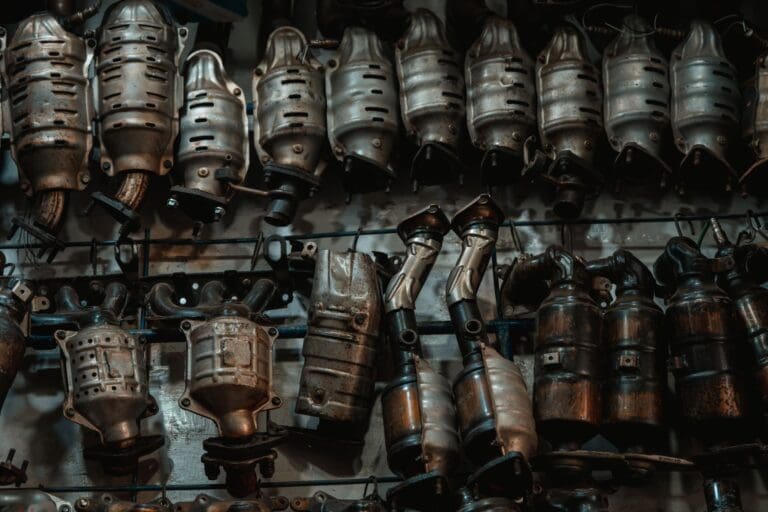
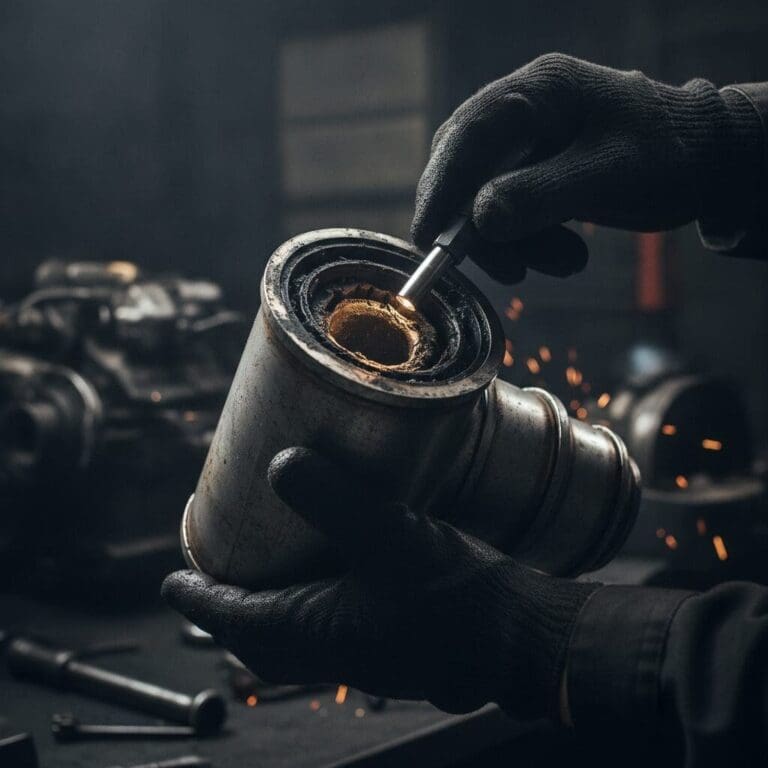
A GPF is a ceramic honeycomb in the exhaust with alternately blocked channels. Gas is forced through the porous walls, and solid particles are left behind. If that sounds familiar, it should — it is the same principle as the diesel particulate filter that has been fitted to diesels for well over a decade.
The reason it became necessary is a change in how petrol engines are built. Port-fuel injection sprays fuel into the inlet tract, where it has time to mix with air. Direct injection sprays fuel straight into the cylinder at high pressure, which improves efficiency and CO2 figures but leaves less time for mixing. The result is localised fuel-rich pockets, incomplete combustion, and soot.
That soot is not a rounding error. AECC’s technical summary records that particulates from GDI engines form nanoparticle aggregates with a fractal-like structure similar to diesel soot, with primary particle diameters spanning roughly 7 to 60 nanometres. Diesel and petrol particles are, in physical terms, close relatives.
Which Petrol Cars Have a GPF?
There is no single switch-on date that covers every manufacturer, so treat any blanket answer with suspicion. The reliable rule of thumb:
| Engine type | Likely to have a GPF? | Notes |
|---|---|---|
| Turbocharged direct-injection petrol, Euro 6c or later | Very likely | Broadly cars registered from around 2018 onward |
| Naturally aspirated direct-injection petrol, Euro 6c or later | Possible | Varies widely by manufacturer |
| Port-injection petrol (older design) | Unlikely | Produces far less particulate matter |
| Petrol hybrid, recent | Often yes | Cold starts and engine cycling matter here |
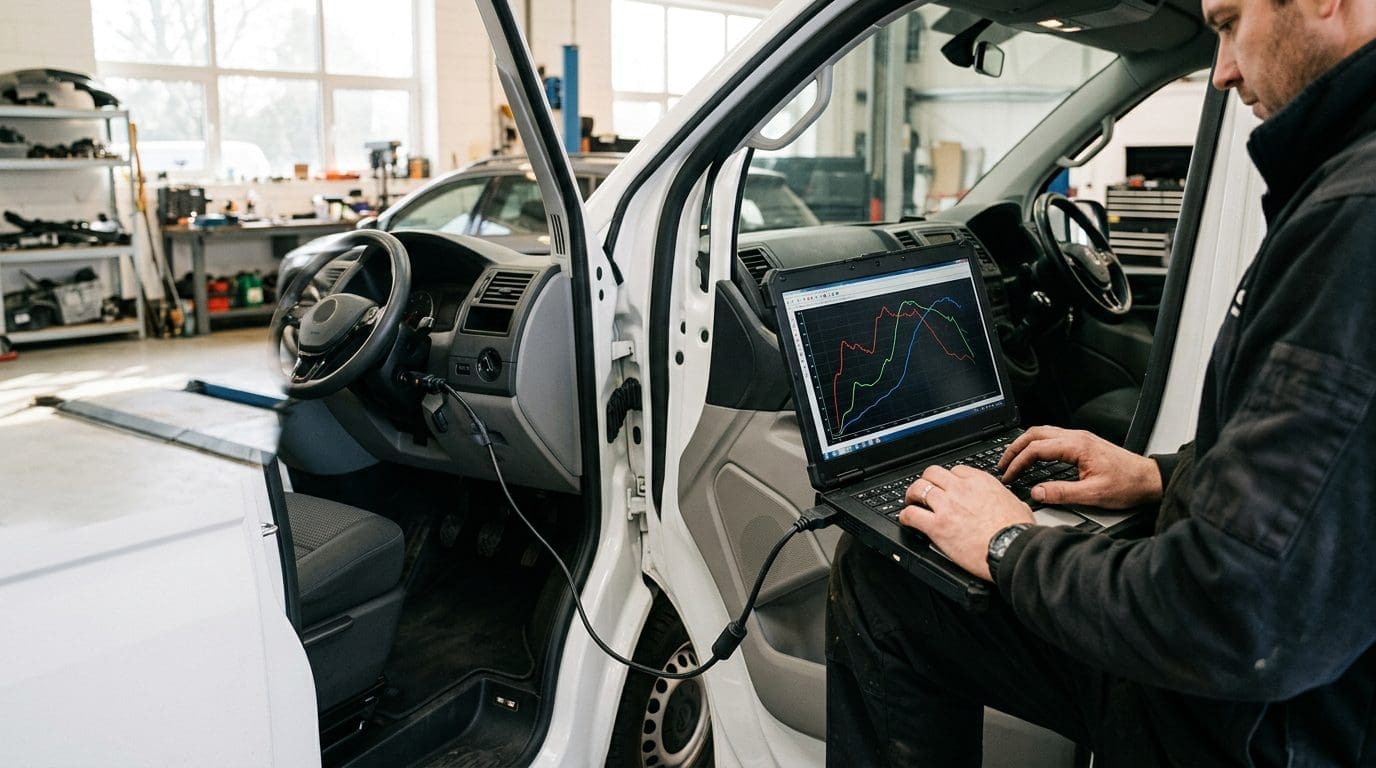
The definitive answer for your car is in the handbook or on the emissions type-approval line of the V5C, not in a generic list on the internet. If you are unsure, a scan of the engine ECU will usually show whether the car monitors a particulate filter at all — the presence of soot-load and differential-pressure parameters is the giveaway.
Symptoms of a Blocked Petrol Particulate Filter
The pattern is recognisable once you know what to look for. In rough order of how often they appear:
- Engine management light with a particulate-filter or emissions-related code stored.
- Reduced power or a soft-feeling top end, especially when the car is asked to pull hard.
- Higher fuel consumption as the engine repeatedly attempts regeneration.
- A hot, sharp smell after a run, or a cooling fan that keeps running after you park.
- Idle that hunts slightly when the filter is heavily loaded.
- Limp mode in the worst cases, where the ECU protects the engine and the exhaust.
One symptom deserves its own line, because it is the one that gets misread most often: oil level that rises rather than falls. Repeated interrupted regenerations can allow unburnt fuel past the rings and into the sump. If your dipstick reads higher than it did at the last service and the car smells of petrol, stop guessing and get it looked at.

Why GPFs Block in the First Place
A healthy GPF on a healthy engine largely looks after itself. Petrol exhaust runs hot enough that passive regeneration happens during normal driving, and the filter burns off accumulated soot without you noticing. The mechanism is the same one we set out in our guide to active, passive and forced regeneration.
So when a GPF genuinely blocks, something else is usually wrong. The common causes:
- Short, cold journeys only. The filter never gets hot enough for long enough. Two miles to work and two miles back is the classic profile.
- Oil consumption. Worn valve stem seals, a tired turbo seal or a failing crankcase breather push oil into the exhaust. Oil ash does not burn off — it accumulates permanently.
- Ignition or injector faults. A weak coil pack or a leaking injector dumps unburnt fuel into the exhaust and loads the filter far faster than design.
- Sensor faults. A failed differential pressure sensor or exhaust temperature sensor can cause the ECU to skip regenerations, or to log a fault on a filter that is actually fine.
- Carbon build-up on the intake side. Direct-injection engines have no fuel washing over the back of the inlet valves, so deposits build up, combustion quality drops and soot production rises. That is exactly the problem engine carbon cleaning is designed to address, and it is often the root cause sitting behind a filter complaint.
What the MOT Actually Checks on a Petrol Car
This is where a lot of online advice is simply wrong, because it copies the diesel rules across.
The MOT inspection manual splits emissions into two sections. The named particulate-filter wording — the instruction to check for a DPF, and to reject a filter that has clearly been cut open and rewelded — sits in the compression-ignition (diesel) section. The spark-ignition section that applies to your petrol car names catalytic converters, oxygen sensors and EGR valves as the visible components a tester inspects. A GPF is not called out by name.
That does not make it a free-for-all. Under the same spark-ignition section, DVSA instructs testers to reject vehicles first used on or after 1 September 2002 where manufacturer-fitted emission control equipment is missing, obviously modified or obviously defective — a Major defect, and an MOT failure. A petrol car also has to pass its metered gas test and have a working engine malfunction indicator lamp.
So the practical position is straightforward: removing a GPF from a road car is not a repair we would recommend or carry out. It is manufacturer-fitted emissions equipment, and a tester who spots that it has gone has grounds to fail the car.
Your Realistic Options
| Option | When it makes sense | What it will not do |
|---|---|---|
| Fix the underlying fault, then drive it properly | Light soot loading, no ash | Nothing, if oil consumption is the cause |
| Forced regeneration via diagnostics | Filter loaded but structurally sound | Remove accumulated oil ash |
| Off-vehicle filter cleaning | Heavy loading, filter still intact | Repair a cracked or melted substrate |
| Replacement filter | Substrate damaged or ash-saturated | Stay clean if the root cause is untouched |
Cleaning a saturated filter properly means taking it off the car and washing it through under controlled conditions rather than pouring something down the exhaust and hoping. That is the same process we use for diesel units on our off-vehicle filter cleaning service, and the principle carries across — the difference is that petrol filters more often come to us because of an oil or ignition fault rather than years of motorway grime.
How to Keep a GPF Healthy
- Give it a proper run. Twenty to thirty minutes at sustained speed, once a week, does more good than any additive.
- Do not interrupt a regeneration. If the fan is roaring and the idle has risen, let the car finish before you switch off.
- Use the right oil. Low-SAPS oil to the manufacturer’s specification produces less ash. This matters more on a GPF car than most owners realise.
- Fix misfires immediately. A single dead cylinder can load a filter in a matter of days.
- Watch the oil level. Rising, not falling, is the warning sign.
Petrol Filter or Emissions Fault in Staffordshire?
We diagnose the cause before recommending the fix. If your petrol car has stored an emissions or particulate-filter fault, we will read the live data, check the soot and ash figures, and tell you honestly whether it needs cleaning, a repair elsewhere on the engine, or nothing at all.
Stoke-on-Trent, Newcastle-under-Lyme, Stafford, Congleton, Leek and Uttoxeter.
Frequently Asked Questions
Do petrol cars have a DPF?
Not a DPF, but many have the petrol equivalent — a GPF, also called an OPF or PPF. It does the same job of trapping soot, and it is fitted mainly to direct-injection petrol engines certified to Euro 6c and later.
Can a petrol particulate filter be cleaned?
Yes, provided the ceramic substrate is intact. Off-vehicle cleaning removes accumulated soot and much of the ash. If the filter has been overheated and the substrate has cracked or partially melted, cleaning will not bring it back and replacement is the only route.
Can a GPF be removed?
Not on a road-going car, in our view. It is manufacturer-fitted emission control equipment, and the MOT inspection manual makes emissions equipment that is missing or obviously modified a Major defect. We do not offer GPF removal for road vehicles.
How long does a petrol particulate filter last?
On a healthy engine driven with a reasonable mix of journeys, a GPF is generally expected to last the life of the exhaust system. The ones that fail early almost always do so because of an underlying fault — oil consumption, a misfire, or a diet of very short cold trips.
Will a blocked GPF fail an MOT?
It can, in two ways. If the engine management light is illuminated for the fault, that alone is a Major defect. If the blockage is bad enough to push the metered gas readings outside limits, the car fails on emissions as well.
Reviewed and signed off by Pro Remapping — diesel and petrol diagnostics, filter cleaning and ECU calibration in Stoke-on-Trent. Published 8 October 2026. Last reviewed 8 October 2026.