

A complete guide to ECU remapping the VW Transporter T6 and T6.1 — engine variants, realistic gains, MPG improvements, and what to expect from the process.
Why the VW Transporter Is One of the UK’s Most Remapped Vans
The Volkswagen Transporter T6 has been one of the best-selling light commercial vehicles in the UK since its launch in 2015. Tradespeople, leisure van converters, campervan builders, and small fleet operators all gravitate toward it for the same reasons: solid build quality, a refined drive, and a reputation for reliability that outlasts many of its rivals.
It also happens to be one of the most responsive vans to an ECU remap. VW produces the T6 with multiple power outputs from the same 2.0-litre TDI engine, which means the hardware in every variant is capable of producing significantly more power than the factory ECU allows. A Stage 1 remap adjusts the software to unlock that latent performance without any hardware modifications.
Whether you’re driving a base 84hp Kombi for tradespeople or a 150hp T6.1 Highline, there is a meaningful upgrade available through remapping alone.
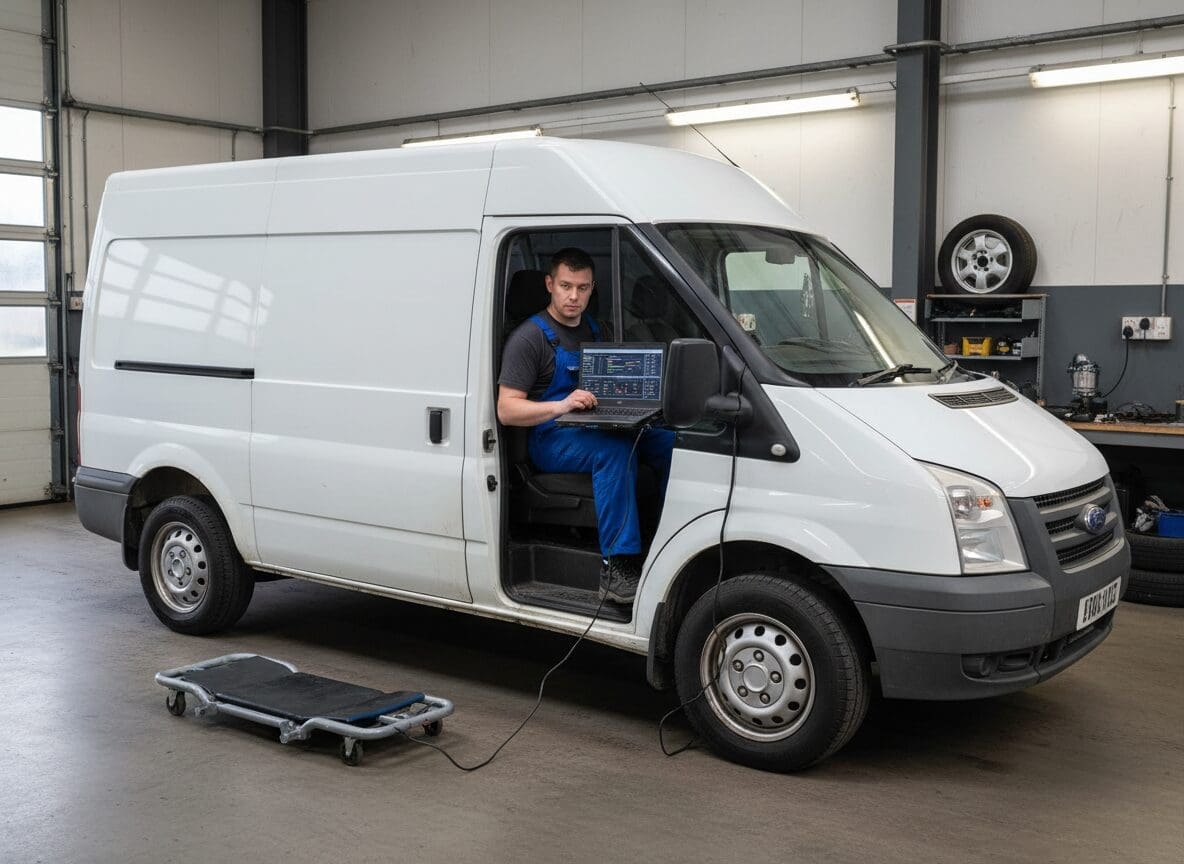
VW Transporter T6/T6.1 Engine Variants and Remap Potential
All T6 and T6.1 Transporters use variants of the EA288 2.0-litre TDI diesel engine. The BiTDI variant uses twin turbochargers for the higher-output models. Here’s how the remap gains stack up across the range.
| Engine | Factory Power | Post-Remap | Torque Gain |
|---|---|---|---|
| 2.0 TDI (T6) | 84hp / 200Nm | ~120hp / 280Nm | +80Nm |
| 2.0 TDI (T6) | 102hp / 250Nm | ~140hp / 320Nm | +70Nm |
| 2.0 TDI (T6) | 114hp / 290Nm | ~150hp / 360Nm | +70Nm |
| 2.0 TDI (T6/T6.1) | 140hp / 340Nm | ~175-185hp / 420Nm | +80Nm |
| 2.0 TDI (T6.1) | 150hp / 370Nm | ~190hp / 440Nm | +70Nm |
| 2.0 BiTDI (T6/T6.1) | 199hp / 450Nm | ~240hp / 520Nm | +70Nm |
Figures are indicative and depend on vehicle condition, fuel system health, and individual ECU variants. The 140hp TDI is the most popular remap and consistently achieves the gains shown above on healthy vehicles.
T6 vs T6.1: Does It Make a Difference?
The T6.1, introduced in 2019, brought updates to the engine management system and minor hardware revisions. The remap approach is similar between the two generations, though the T6.1 uses an updated ECU that requires slightly different tooling. Both generations respond well to Stage 1 remapping and achieve comparable percentage gains from their respective base outputs.
What Does a Stage 1 Remap Adjust on the Transporter?
The 2.0 TDI EA288 in the T6/T6.1 is a well-mapped, modern diesel with multiple programmable parameters. A Stage 1 remap works entirely through the ECU — no hardware changes are required. The key adjustments we make include:
- Turbo boost targets: The variable-geometry turbocharger is capable of producing more boost than the factory map requests. We raise targets safely within the turbo’s operational envelope.
- Fuelling: Injection quantity and timing are recalibrated so the additional air delivered by the higher boost is used efficiently.
- Rail pressure: Common rail fuel pressure is optimised for improved combustion across the rev range.
- Torque limiters: VW applies torque caps across gear ranges to protect the factory drivetrain specification. These are adjusted to allow the full torque output of the remapped engine to reach the road.
- Throttle mapping: The throttle response curve is sharpened, eliminating the sluggish initial response that owners of lower-powered T6 variants notice when pulling away under load.
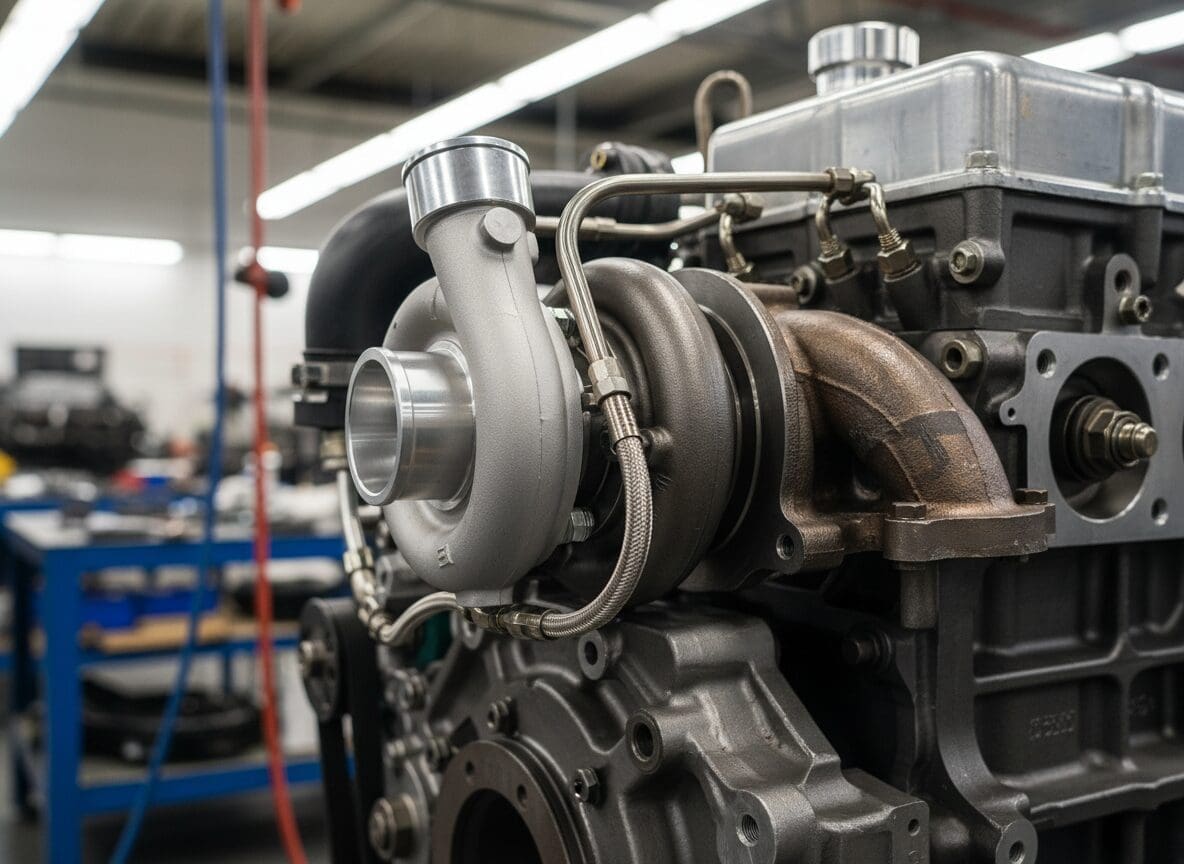
Real-World MPG Improvements After a T6 Remap
Economy is often the primary motivation for Transporter owners who use their vans commercially. The logic is straightforward: a remapped 140hp engine produces the same motorway cruising output at lower throttle demand than before, which translates directly into fuel savings.
Where MPG Gains Are Most Consistent
Transporter owners driving regular motorway or dual carriageway routes — builders visiting multiple sites, tradespeople covering wide service areas, fleet vehicles doing regional deliveries — typically see the strongest fuel economy improvements after remapping. The 140hp variant at motorway speeds is the most commonly reported improvement case, with owners regularly citing 4–6 MPG gains on sustained runs.
Where Results Vary
Urban-only driving on short routes limits the potential MPG improvement, partly because the extra power is less useful and partly because short-trip diesels already run inefficiently. If your Transporter is genuinely doing stop-start urban work all day, the fuel economy gain will be smaller — but the improved low-rev torque is still noticeable when pulling away at junctions or in traffic.
Typical Economy Gains
- Motorway runs: 4–6 MPG extra
- Mixed A-road/motorway: 3–4 MPG extra
- Urban delivery: 1–2 MPG extra
- Motorway towing: 2–4 MPG extra
Performance Improvements
- Significantly stronger low-rev torque
- Better loaded performance uphill
- Reduced need for gearchanges
- More confident motorway overtaking
- Sharper throttle response overall
Is It Safe to Remap a VW Transporter T6/T6.1?
Stage 1 remapping the T6/T6.1 is a well-established procedure that thousands of UK owners have had carried out. The EA288 2.0 TDI engine in its 140hp and 150hp configurations is proven to handle the gains reliably when the remap is calibrated correctly.
The most important factor is vehicle condition. We carry out a pre-remap health check on every T6/T6.1 before touching the ECU. The checks we run include:
- Live data scan for all fault codes (current and pending)
- Turbo actuator position and boost pressure readings
- MAF sensor accuracy at idle and under acceleration
- Fuel rail pressure values across the rev range
- EGR valve operation
- DPF pressure differential (to ensure the filter isn’t blocking)
T6 Remap and DPF / AdBlue Systems
Most T6 and all T6.1 Transporters are fitted with a diesel particulate filter (DPF). Many T6.1 models also use AdBlue (SCR system) for NOx reduction. A Stage 1 remap adjusts the engine calibration only and does not remove, blank off, or interfere with either system.
Your DPF will continue to regenerate normally after remapping. Your AdBlue system will continue to dose correctly. The engine management changes we make are entirely within the parameters of these emissions systems.
If your T6 is experiencing DPF faults, EGR faults, or AdBlue issues alongside a desire to remap, we can assess the full picture and advise on the sensible order of work. In many cases it’s worth resolving fault-related issues first so the remap starts from a clean baseline.
The Remapping Process at Pro Remapping
We are based in Fenton, Stoke-on-Trent and carry out T6/T6.1 remaps for owners across Staffordshire, Cheshire, and surrounding areas. The process is straightforward and typically takes 60–90 minutes.
- On arrival, we scan the vehicle for fault codes and check live data to confirm the engine is in remap-ready condition.
- We connect to the ECU, read the factory calibration, and build a custom tune specific to your vehicle’s data.
- The new calibration is written to the ECU and verified.
- We carry out a road test to confirm the remap is performing correctly and no fault codes have been introduced.
- We provide a brief handover covering what’s changed and what to expect over the first few hundred miles.
Book Your T6 Remap
Based in Fenton, Stoke-on-Trent. We remap VW Transporters across Staffordshire, Newcastle-under-Lyme, Congleton, Leek, Stafford, and Uttoxeter. Contact us for a quote on your specific variant.
Fenton, Stoke-on-Trent
ST4 3ER
Serving: Stoke, Newcastle-under-Lyme, Stafford, Congleton, Leek, Uttoxeter
Frequently Asked Questions
Can a Stage 1 remap damage a T6 Transporter?
On a healthy vehicle, no. Stage 1 remapping stays within the proven tolerances of the EA288 2.0 TDI engine. We carry out a pre-remap health check on every vehicle to confirm the engine is in a suitable state before starting.
Which T6 variant benefits most from remapping?
The 140hp 2.0 TDI is the most popular remap due to its combination of reliability, remap headroom, and the noticeable improvement in everyday performance. The 84hp and 102hp variants also gain significantly in percentage terms, which transforms these lower-spec vans for commercial work.
How long does a T6 remap take?
Most T6/T6.1 remaps take between 60 and 90 minutes including the pre-remap health check and post-remap road test.
Does remapping affect the T6’s DSG gearbox?
A Stage 1 engine remap adjusts engine parameters only. The DSG gearbox calibration remains at factory settings. If you’re interested in a DSG remap to match the engine, this is a separate procedure that can be discussed at the time of booking.
Will my T6 still pass its MOT after remapping?
Stage 1 remapping adjusts fuel and boost calibration but does not remove any emissions hardware. The DPF and EGR systems remain intact. T6s remapped to Stage 1 consistently pass their MOT emissions tests without issue.
Pro Remapping, 201 King Street, Fenton, Stoke-on-Trent, ST4 3ER. ECU remapping specialists for VW Transporters and commercial vehicles across Staffordshire.


