

A practical guide to petrol ECU remapping — what gains to expect, which cars respond best, and what Stage 1 actually involves
Can All Petrol Cars Be Remapped?
The short answer is yes, but the gains vary enormously between platforms. ECU remapping works by modifying the calibration data stored in the engine control unit — adjusting parameters such as ignition timing, boost pressure, fuelling maps, and rev limiters to get more performance from the engine while staying within safe operating limits.
On naturally aspirated petrol engines, the scope for gains is limited. Without forced induction there is no boost map to optimise, and gains from timing and fuelling adjustments alone are typically modest — perhaps 5 to 10 bhp. These remaps are still worth doing in some cases, particularly if the factory calibration is overly conservative due to emissions compliance, but the transformation is nothing like what you see on turbocharged cars.
Turbocharged petrol engines are where remapping really delivers. The ECU controls boost pressure directly, and factory maps are typically written to safe middle-ground settings that account for low-quality fuel, high ambient temperatures, and a wide range of drivers. A skilled remapper can push these parameters closer to what the hardware is genuinely capable of, with significant results.
Quick answer: Turbocharged petrol cars typically gain 15 to 40 percent more power from a Stage 1 remap. The best results come from factory-detuned performance platforms — cars like the Ford Focus ST, VW Golf GTI, and BMW 1 Series where the manufacturer has clearly held back power for commercial reasons.

How Much Power Can a Petrol Remap Add?
Gains depend on three main factors: the base engine, its standard power output relative to the platform’s mechanical limits, and whether you are doing Stage 1 (bolt-on, no hardware changes) or Stage 2 (with hardware upgrades such as a performance exhaust or intercooler).
As a general guide for Stage 1 turbocharged petrol remaps:
| Engine Type | Typical Standard Power | Typical Stage 1 Gain | Notes |
|---|---|---|---|
| Ford 1.0 EcoBoost (100-125bhp) | 100-125bhp | +20-30bhp | Strong response for a small engine |
| Ford 2.0 EcoBoost (ST) | 250bhp | +30-45bhp | One of the best Stage 1 platforms |
| VW/Audi 2.0 TSI (EA888) | 150-245bhp | +25-50bhp | Widely remapped, well-understood |
| BMW B48 (1.5-2.0T) | 136-258bhp | +30-55bhp | Excellent headroom, especially 30i variants |
| MINI Cooper S / JCW (B48) | 192-231bhp | +25-45bhp | Strong gains on the JCW platform |
| Vauxhall 1.4T / 1.6T | 100-200bhp | +15-30bhp | Good platform, more modest gains |
Best Petrol Cars for Stage 1 Remapping
Some petrol platforms genuinely stand out from the crowd — either because the factory tune is particularly conservative, or because the engine hardware has significant headroom that a remap can unlock.
Ford Focus ST (2.3 EcoBoost)
The Focus ST is one of the strongest Stage 1 petrol remap candidates in the UK market. The 2.3-litre EcoBoost engine produces 280bhp in standard form but responds exceptionally well to a calibration change, with reliable Stage 1 figures of 320 to 340bhp reported by multiple respected mappers. This is a factory-detuned engine with substantial headroom — Ford uses the same engine family in the Focus RS at 350bhp with hardware changes, so the Stage 1 tune is well within safe limits.
VW Golf GTI / GTI Performance (EA888 2.0 TSI)
The EA888 engine family is arguably the most widely remapped petrol engine in the UK. In standard GTI form (245bhp), a Stage 1 remap typically delivers 290 to 310bhp with proportional torque gains. The GTI Performance edition at 265bhp pushes even further. The engine management system is well understood, calibration files are mature, and the results are consistent across the market. One caveat: DSG gearbox health matters — a remap at these power levels should be paired with a DSG service if it has not been done recently.
BMW 1 Series / 2 Series (B48 Engine — 118i, 120i, 128ti, M135i)
The B48 engine is one of the best-engineered small turbocharged petrol units currently in production. In 118i form (136bhp) it is clearly factory-limited for commercial positioning reasons — the hardware is identical to what propels the 330i at 258bhp. Stage 1 remaps on the lower-power 118i variants show impressive gains of 170 to 190bhp. At the upper end, the M135i xDrive (306bhp) gains 50 to 80bhp from a Stage 1 calibration change alone, putting it firmly in hot hatch territory.
MINI Cooper S / JCW (B48)
MINI uses the same BMW B48 engine in its performance models, making the Cooper S and John Cooper Works strong remap candidates. Standard JCW power of 231bhp can be lifted to 275 to 285bhp with a Stage 1 remap, with torque gains that are often more noticeable than the power figure suggests. This transforms an already entertaining car into something considerably more aggressive.
Ford Fiesta ST (1.5 EcoBoost)
The Fiesta ST’s 1.5 EcoBoost three-cylinder engine is a surprising performer. At 200bhp standard, Stage 1 remaps typically yield 230 to 250bhp — a 15 to 25 percent improvement that transforms the car’s acceleration and tractability. The engine also responds well to Stage 2 work with a full exhaust and intercooler upgrade.
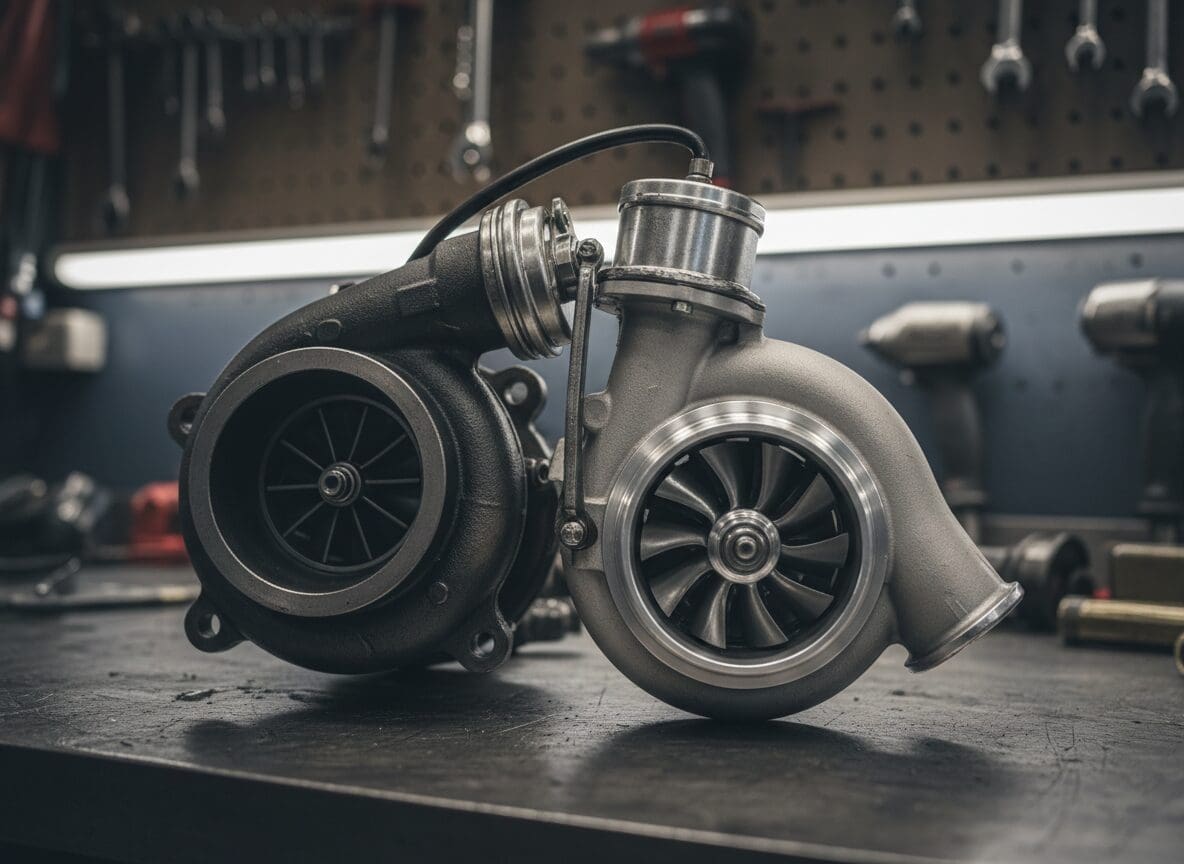
Stage 1 vs Stage 2: What Is the Difference for Petrol Cars?
Stage 1 remapping is an ECU calibration change only — no hardware modifications are required. The remap works with the car’s standard intercooler, exhaust, injectors, and fuelling system. This makes it the most straightforward upgrade and the best value for money for most drivers.
Stage 2 involves hardware changes that unlock further gains. Common Stage 2 modifications for petrol cars include a performance exhaust (to reduce backpressure and allow higher boost), a larger front-mount intercooler (to keep intake temperatures down under sustained boost), and in some cases upgraded fuel injectors or a high-flow air intake. Stage 2 remaps are written specifically for the hardware combination fitted to the car.
Stage 1 Remap
ECU calibration only. Works with standard hardware. Typical gains of 15 to 40 percent on turbocharged petrol engines. Usually the best value option and lowest risk profile. Ideal for daily-driven cars where reliability is the priority.
Stage 2 Remap
Requires supporting hardware. Higher power potential but greater cost and complexity. Best for enthusiasts who want maximum performance and are prepared to accept higher running costs and potential drivetrain strain. Not suitable for all gearbox combinations.
Does a Petrol Remap Improve Fuel Economy?
This is one of the most common questions we get asked, and the honest answer is: it depends on how you drive after the remap.
A Stage 1 petrol remap optimises the engine’s calibration — which means the engine operates more efficiently in its mid-range. If you maintain your pre-remap driving style and use the extra torque to change up earlier rather than staying in a lower gear under load, fuel consumption can improve. Some drivers report 5 to 10 percent better economy on motorway driving specifically.
However, if you exploit the extra power — accelerating harder, holding gears longer, or simply enjoying the car more — fuel consumption will increase accordingly. The remap does not magically make the engine more efficient at the top end; it gives you more performance headroom, and using that headroom uses more fuel.
The realistic expectation for most drivers on mixed driving is a broadly similar fuel economy figure to before the remap. Economy gains are more consistently seen on diesel remaps, where the torque increase reduces the need for downshifts under load.
What Does a Petrol ECU Remap Cost in the UK?
Petrol remap pricing in the UK varies by vehicle and specialist, but typical figures for a quality Stage 1 remap are:
- Small turbocharged petrol (1.0 to 1.4T): £200 to £350
- Hot hatch / performance (2.0T, Focus ST, Golf GTI): £300 to £500
- BMW M models and premium platforms: £350 to £600
- Stage 2 (with hardware): £500 to £900+ depending on modifications
Be cautious of very cheap remaps — a quality file written specifically for your vehicle by a skilled tuner is worth the investment. Poorly written remap files can cause overboost, knock, and in extreme cases engine damage. At Pro Remapping, all petrol remaps include a pre-remap health check and are written to safe limits for your specific engine build.
Will a Petrol Remap Fail My MOT?
A well-written petrol remap should not cause an MOT failure in itself. Modern petrol engines with direct injection and three-way catalysts are tested on a simple idle emissions check during the MOT. A Stage 1 remap does not typically affect idle emissions — the car should still easily pass the CO and HC measurements.
However, if the remap is poorly written and causes the engine to run rich at idle, this could result in elevated HC readings and an MOT failure. This is another reason why quality of calibration matters — at Pro Remapping, we ensure idle fuelling and emissions compliance are maintained within the remap.
The other consideration is insurance. You must declare any ECU remap to your insurer, as it is a material modification. Failure to declare it can invalidate your policy. Some insurers increase premiums significantly; others — particularly specialists in modified vehicles — are more competitive.
Always declare a remap to your insurer. This is a legal requirement in the UK and failure to do so can void your cover. Pro Remapping can provide documentation confirming the remap specification if your insurer requires it.
Ready to Remap Your Petrol Car?
Pro Remapping is based in Stoke-on-Trent, serving Staffordshire, Cheshire, and the wider Midlands. We carry out petrol Stage 1 and Stage 2 remaps on all makes and models, with a pre-remap health check included as standard. If you have questions about what your specific car can achieve, give us a call — we will give you a straight answer.
Stage 2 Available
All Makes & Models
Pre-Remap Health Check
Stoke-on-Trent
Frequently Asked Questions
Is it worth remapping a naturally aspirated petrol car?
Gains are more modest without turbocharging — typically 5 to 15bhp on naturally aspirated engines. Whether it is worth it depends on your goals. If the factory map is known to be conservative (some older Ford and Vauxhall naturally aspirated engines, for example), a remap can improve throttle response and mid-range pull meaningfully. For outright power gains, turbocharged cars offer far better value.
Will a petrol remap void my warranty?
Yes, in most cases. UK manufacturers can refuse warranty claims on engine components if a remap is detected. If the car is still under warranty, it is worth waiting or factoring in the cost of any potential warranty claim. Once out of warranty, this concern no longer applies.
How long does a petrol remap take?
A Stage 1 remap typically takes 1 to 2 hours at the workshop, including the health check, data read, file writing, and reinstallation. Some vehicles with additional security or access restrictions can take longer. You can usually wait on site or arrange collection for the same day.
Can a petrol remap be reversed?
Yes. The original calibration data is backed up before any changes are made, and the ECU can be returned to the standard map at any time. If you need to return the car to a dealer for warranty work, Pro Remapping can return the car to stock calibration beforehand.
Does a petrol remap affect reliability?
A properly written Stage 1 remap on a healthy engine should not reduce reliability. The calibration is written within the mechanical limits of standard components. The key factors are: the condition of the engine before the remap, the quality of the calibration file, and ongoing maintenance. An engine with worn spark plugs, an ageing coilpack, or a clogged injector will perform better after the remap once those items are addressed.


