
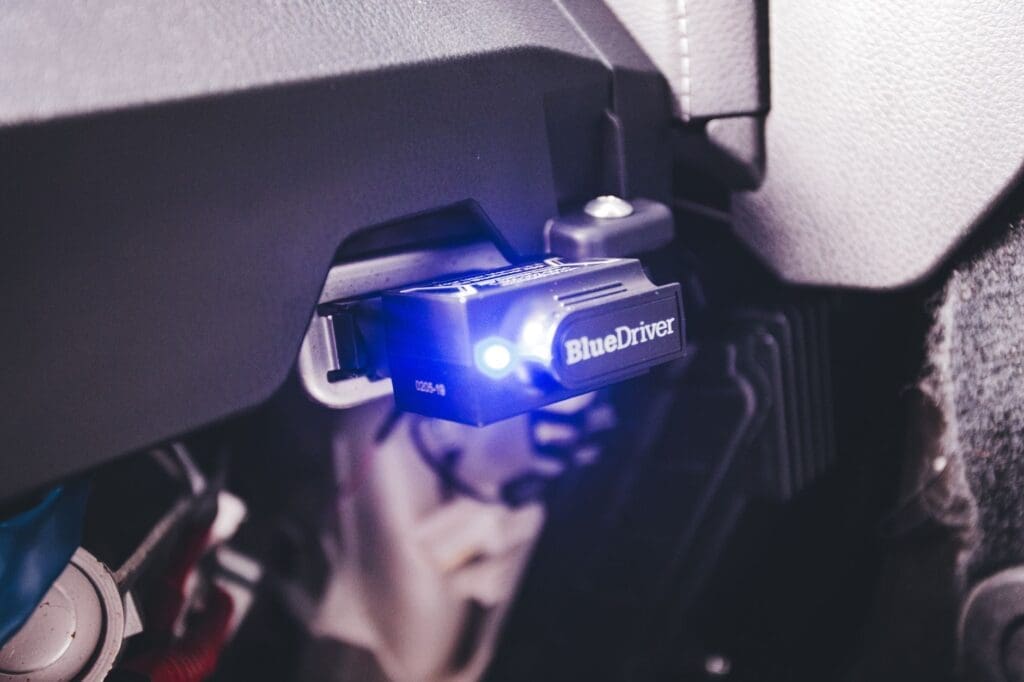
P20EC, P20ED and P20EF: The SCR Catalyst Fault Codes Explained
These three codes are not AdBlue pump codes. They point at the catalyst itself — and that changes the whole diagnostic route.
Most AdBlue fault codes a driver meets are plumbing codes: pressure too low, pressure too high, dosing performance. P20EC, P20ED and P20EF are a different family. They are the system telling you something about the catalyst — its temperature, or how well it is converting — and if they are treated as pump faults, the wrong part gets replaced.
This guide covers what each code means, what actually triggers them on UK diesels, why clearing them achieves nothing, and how a proper diagnosis is structured.
What Each Code Means
| Code | Standard description | What it is really saying |
|---|---|---|
| P20EC | SCR NOx catalyst — over temperature | The main SCR catalyst is running hotter than the ECU expects |
| P20ED | SCR NOx pre-catalyst — over temperature | The catalyst upstream of the SCR is overheating |
| P20EF | SCR NOx pre-catalyst efficiency below threshold | The upstream catalyst is not doing enough of its job |
| P20EE | SCR NOx catalyst efficiency below threshold | The main SCR catalyst is not converting enough NOx |
| P20E8 / P20E9 | Reductant pressure too low / too high | A genuine AdBlue delivery fault |
The last row is the useful comparison. P20E8 and P20E9 are the codes that genuinely implicate the AdBlue pump, lines and injector — we covered that family in our guide to P20E8, P204F and P20EE. The EC, ED and EF codes sit one step downstream, and the same repair will not clear them.

How the SCR System Works — Briefly
Selective catalytic reduction injects AdBlue, a urea solution, into hot exhaust gas ahead of a catalyst. The heat breaks the urea down into ammonia, and the ammonia reacts across the catalyst with nitrogen oxides. As RepairPal’s OBD-II reference for this code family describes it, diesel exhaust fluid is injected into the exhaust stream so that the system can convert harmful NOx into nitrogen, carbon dioxide and water.
Three conditions have to hold for that to work: enough AdBlue of the right quality, a catalyst in good condition, and the correct temperature window. Too cold and the reaction does not run. Too hot and the catalyst coating degrades permanently. The over-temperature codes exist to protect against the second case.
What Triggers an Over-Temperature Code (P20EC and P20ED)
Exhaust temperature in that part of the system is not random. When it climbs beyond expectation, there is usually a reason upstream:
- Repeated or extended DPF regeneration. Regeneration deliberately raises exhaust temperature. If the filter is heavily loaded and the engine keeps trying, the catalyst downstream takes the heat.
- Over-fuelling. A leaking injector, a failing fuel pressure regulator or poor injector coding puts unburnt fuel into the exhaust, where it burns across the catalyst rather than in the cylinder.
- A misfire. The same mechanism, from a different cause. A dead cylinder sends raw fuel straight down the exhaust.
- A failed exhaust gas temperature sensor. Common, cheap, and frequently the entire fault. The catalyst is fine; the sensor is lying about it.
- Sustained heavy load. Towing at motorway speed on a hot day, on a vehicle already marginal for other reasons.
Notice how many of those have nothing to do with AdBlue. That is the practical value of recognising these codes for what they are.

What Triggers P20EF (Efficiency Below Threshold)
An efficiency code means the measured conversion has fallen short of the modelled one for long enough that the ECU is confident about it. The usual causes, in the order we tend to find them:
- A degraded catalyst. Often the consequence of exactly the over-temperature events above, or of long-term contamination.
- A failing NOx sensor. These sensors live in a hostile environment and drift as they age. A drifting downstream sensor produces a convincing efficiency code on a perfectly healthy catalyst — we go into the symptoms in our NOx sensor fault guide.
- Poor quality or contaminated AdBlue. Urea concentration outside specification changes the chemistry.
- Under-dosing. A partially blocked injector delivers some AdBlue — enough to avoid a pressure code, not enough to convert properly.
- Crystallisation. Urea deposits building up in the dosing area restrict spray pattern and coverage.
Why Clearing the Code Does Nothing
Every one of these codes is set after a monitored condition has been observed over a drive cycle. Clear the memory and the monitor simply runs again. If the underlying condition is still there, the code returns — usually within a few hundred miles, sometimes within one journey.
Worse, clearing wipes the freeze-frame data that told you when and under what conditions the fault occurred. That data is the most useful diagnostic asset you have. We ask customers not to clear codes before an appointment for exactly this reason.
How These Faults Are Diagnosed Properly
A structured route through this family looks like this:
- Read every module, not just the engine. Related codes elsewhere often name the real fault.
- Review freeze-frame data. Load, speed, coolant temperature and whether a regeneration was running at the time.
- Log live exhaust gas temperatures across a road test and compare the sensors against each other. Sensors that disagree at idle are already telling you something.
- Log both NOx sensors and watch the upstream and downstream values during steady cruise.
- Check AdBlue dosing quantity and pressure to rule out under-dosing masquerading as a catalyst fault.
- Inspect for crystallisation around the dosing injector and the mixing section.
- Only then consider the catalyst itself.
Whether the answer is a repair or something else depends entirely on what those tests show, and it is worth understanding the difference between the two routes before you decide — we set that out in AdBlue removal vs AdBlue repair.
What Happens If You Ignore It
An over-temperature code on its own may not stop the vehicle. Left alone, though, the sequence is fairly predictable: catalyst efficiency drops, an efficiency code joins the first one, the system moves into a driver-inducement strategy, and the vehicle ends up speed-limited or refusing to restart.
There is an MOT dimension too. The DVSA inspection manual tells testers to check components that are visible and identifiable, and it names selective catalytic reduction valves among them, with manufacturer-fitted emission control equipment that is missing, obviously modified or obviously defective recorded as a Major defect. An illuminated engine management light is a Major defect in its own right.
SCR or AdBlue Fault on Your Vehicle?
We diagnose the SCR system properly — temperature sensors, NOx sensors, dosing quantity and catalyst condition — before anything is replaced. If your van or car has stored P20EC, P20ED, P20EF or a related code, bring us the fault codes and we will tell you what the data actually shows.
Stoke-on-Trent, Newcastle-under-Lyme, Stafford, Congleton, Leek and Uttoxeter.
Frequently Asked Questions
Can I drive with a P20EC or P20ED code?
Usually yes in the short term, but not indefinitely. Over-temperature codes are a protection warning, and continued running in that condition is what permanently degrades the catalyst. Get it read before the fault escalates into an efficiency code and a countdown.
Is P20EF always a failed catalyst?
No, and assuming so is expensive. A drifting NOx sensor, under-dosing from a partially blocked injector, or out-of-specification AdBlue can all produce the same code on a catalyst that is still serviceable. The tests come before the parts.
What is the difference between P20EE and P20EF?
Both are efficiency codes. P20EE refers to the main SCR NOx catalyst, and P20EF refers to the pre-catalyst upstream of it. They can appear together, and when they do the fault is more likely to be systemic than a single component.
Will these codes cause a limp mode or a no-start?
Not immediately. Emissions inducement strategies escalate in stages — warning first, then reduced power or a speed limit, then a restart lockout after a set distance. The earlier the fault is diagnosed, the less likely you are to meet the later stages.
Does poor quality AdBlue really cause fault codes?
It can. AdBlue is a specified urea concentration, and fluid that is out of specification, contaminated or has been stored badly changes the reaction across the catalyst. It is a genuine cause of efficiency codes, and it is easy to check.
Reviewed and signed off by Pro Remapping — diesel diagnostics, SCR and AdBlue system repair and ECU calibration in Stoke-on-Trent. Published 13 October 2026. Last reviewed 13 October 2026.


