
Pro Remapping — Stoke-on-Trent & Staffordshire
Two methods, one goal: stopping AdBlue faults from shutting down your vehicle. Here is what each actually does, where each fails, and which is appropriate for your situation.
When an AdBlue fault reaches countdown stage and a van threatens to not restart, the owner wants a permanent fix — not another temporary top-up that clears the light for a fortnight. Two options come up in nearly every conversation about AdBlue removal: the emulator and the software delete.
Most of the web content comparing these two methods is written by offshore emulator sellers with an obvious commercial interest in the emulator side. This guide is written by a Stoke-on-Trent ECU remapping company that does software deletes and has no financial reason to recommend one method over another. We’ll explain how each works and what the honest case for each looks like.
What is an AdBlue emulator?
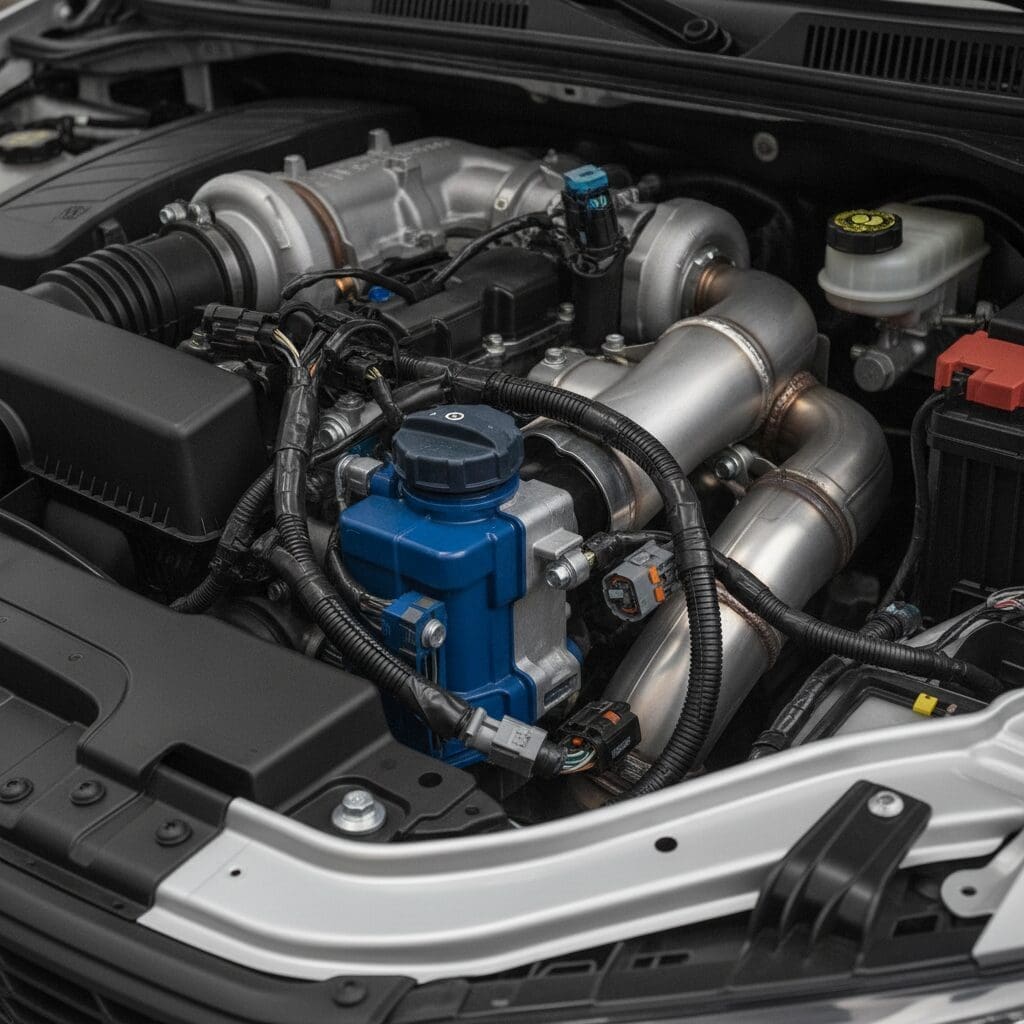
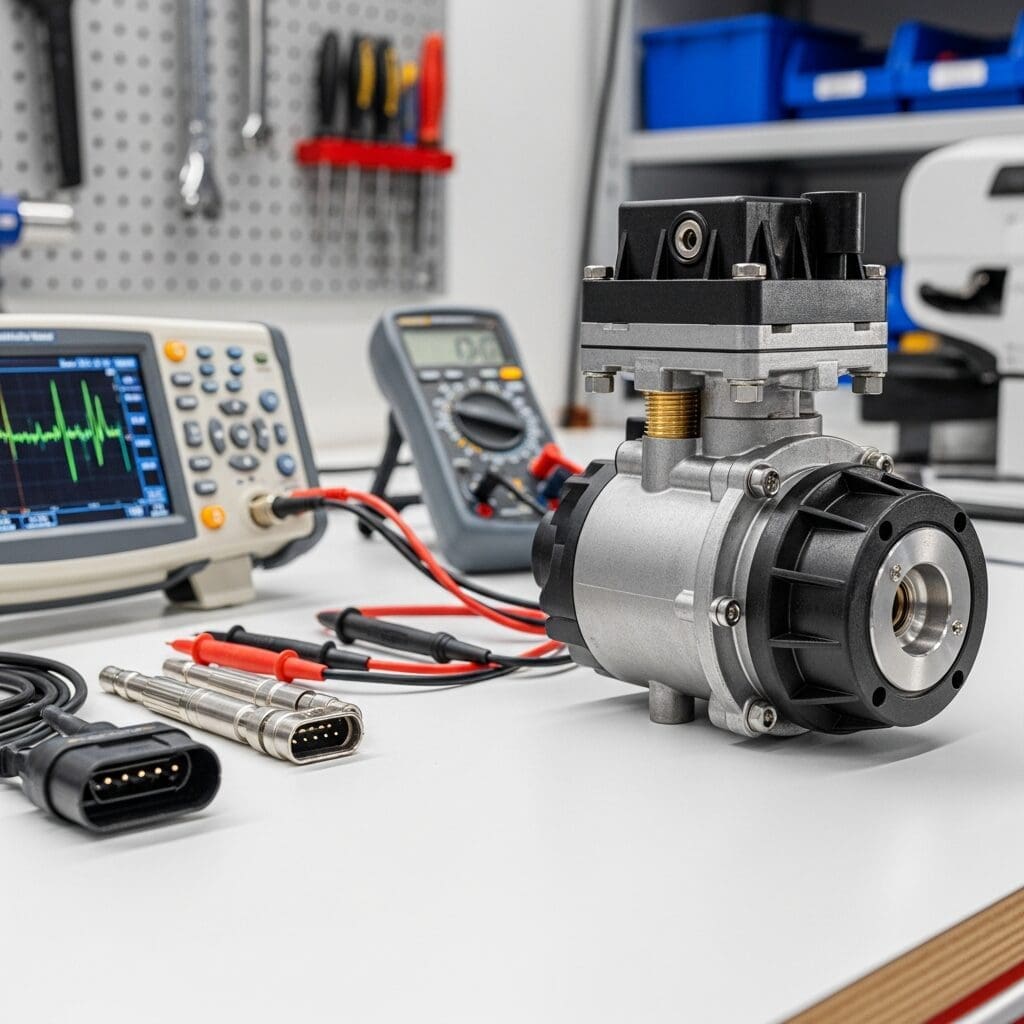
An AdBlue emulator is a small electronic module — roughly cigarette-box sized — that connects directly to the vehicle’s CAN-bus wiring. The CAN bus is the communication network that links the ECU to sensors and subsystems throughout the vehicle. The emulator intercepts the signals from AdBlue-related components (the NOx sensor, the SCR temperature sensor, the dosing pump, the tank level sensor) and replaces them with fake “normal operation” readings.
From the ECU’s point of view, the AdBlue system is working perfectly. No fault codes are stored, no countdown starts, and the engine operates normally. The physical SCR hardware — the AdBlue tank, pump, injector, and catalytic converter — remains in place but is effectively bypassed by the emulator’s spoofed signals.
Installation is straightforward: the device plugs into the existing wiring loom, typically near the AdBlue pump or NOx sensor connectors. It is reversible — disconnect it and reconnect the original wiring, and the SCR system returns to normal operation (or rather, to the faulted state it was in before, since the underlying fault has not been repaired).
What is a software AdBlue delete?
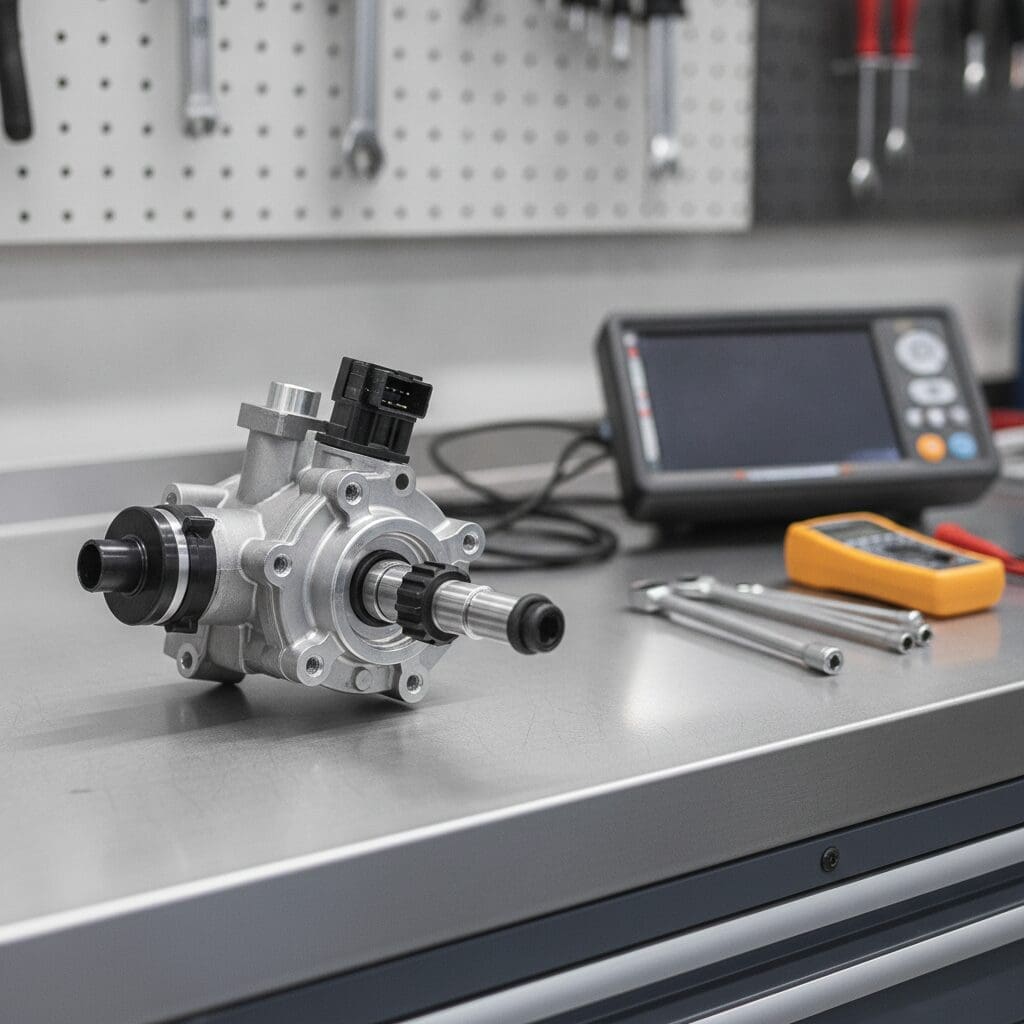
A software delete (also called ECU AdBlue removal or SCR delete) involves reading the ECU’s existing calibration via a professional tuning interface, modifying the calibration to remove the AdBlue control logic, and writing the new calibration back to the ECU. The result is an ECU that has no concept of the AdBlue system — it doesn’t look for the sensors, doesn’t trigger faults if they’re absent, and doesn’t generate countdown timers or no-start conditions.
Unlike the emulator, the physical SCR hardware can optionally remain in place, or it can be removed. Because the ECU no longer monitors those components, their absence generates no warnings. The change is made in software, not hardware, which means there is no physical device to find, no wiring modification visible to a visual inspection, and no emulator box to disconnect.
The modification survives ECU resets and battery disconnections. However, it may or may not survive a dealer software update (which would overwrite the calibration with a fresh factory map), depending on the vehicle. This is worth discussing before the work is done if the vehicle goes to a dealer for servicing.
Key differences at a glance
| Factor | AdBlue Emulator | Software Delete |
|---|---|---|
| How it works | Hardware box spoofs CAN-bus sensor signals | ECU calibration rewritten to remove AdBlue logic |
| ECU touched? | No | Yes |
| Physical hardware | Adds a device to the wiring loom | No added hardware; optional removal of SCR parts |
| Reversibility | High — unplug and reconnect original wiring | Possible, but requires ECU re-flash with OEM map |
| Visual detection risk | Higher — the box can be found | Lower — nothing visible under the bonnet |
| OBD/forensic detection | Possible — static sensor data, no communication variance | Possible with advanced ECU forensic tools |
| Dealer software update | Emulator continues to work (ECU untouched) | Overwritten by dealer update; may need re-deleting |
| Typical application | Agricultural machinery, heavy plant, trucks with ECU access challenges | Cars, vans, light commercial vehicles |
Which is better for your vehicle?
For cars and light commercial vans — the Transit, Sprinter, Vivaro, Boxer, and most passenger cars with AdBlue systems — software delete is technically the stronger solution. The ECU has been calibrated to not know the AdBlue system exists; there is no emulator box to fail, no wiring connection to corrode or work loose over time, and no additional hardware visible to an inspection. It is the version of this work that leaves the vehicle in the most stable long-term state.
The emulator’s genuine advantage is reversibility. If your vehicle needs to be returned to standard — for a dealer update, a pre-sale inspection, or a change of use back to road operation — the emulator can be unplugged in under a minute. An ECU software delete requires a re-flash with the OEM calibration to reverse, which is straightforward but requires the correct tools and time. For vehicles where the owner wants a quick, low-commitment bypass with a clear exit route, the emulator makes more sense.
For heavy vehicles — agricultural tractors, combines, large trucks with proprietary ECU architectures — the emulator is often the only practical option. Software access to these ECUs is restricted or requires specialist tools that are not universally available. The emulator works at the CAN-bus level without needing to open the ECU at all.
The legal position in the UK
Neither option is legal for vehicles driven on UK public roads. Tampering with an emissions control system — including bypassing, removing, or defeating the AdBlue SCR system — is an offence under Section 42 of the Road Traffic Act 1988. Fines are up to £1,000 for cars and £2,500 for light goods vehicles. Any vehicle that fails an MOT emissions check as a result of an AdBlue bypass also cannot be driven until it passes.
We cover the full picture on the UK legal position — including what the MOT actually checks for and what “off-road use” means in this context — in our dedicated guides on whether AdBlue removal is legal and AdBlue delete and UK law. The emulator versus software question is about the technical method of the bypass; it does not change the legal status of what is being done.
For vehicles that are genuinely off-road-only — plant, agricultural, non-road mobile machinery — the legal position is different, and both options are used routinely.
What about emulator sellers claiming UK legality?
A significant portion of the emulator market is based in Eastern Europe and some sellers make claims about “Euro 6 compliance” or UK legal status that do not withstand scrutiny under current UK law. An emulator that spoofs SCR sensor signals does not cause the vehicle to actually meet Euro 6 emissions standards — it causes the vehicle to report as if it does, while emitting higher NOx than a functioning SCR system would allow. The distinction matters. We would encourage caution with any supplier that presents the emulator as a road-legal solution in the UK without qualifying that claim carefully.
AdBlue emulator — common questions
What is an AdBlue emulator?
An AdBlue emulator is a small electronic device that connects to the vehicle’s CAN-bus wiring and sends false “normal operation” signals to the ECU in place of the real AdBlue sensor readings. The ECU believes the SCR system is working, so it generates no faults, no countdowns, and no no-start conditions. It is a hardware bypass that leaves the ECU software unchanged.
Is an AdBlue emulator legal in the UK?
No, not for vehicles driven on public roads. Bypassing an emissions control system is an offence under Section 42 of the Road Traffic Act 1988, regardless of whether the bypass is done by hardware emulator or ECU software delete. Both are used legally on genuine off-road vehicles such as agricultural machinery and non-road mobile plant.
What is the difference between an emulator and a software delete?
An emulator is a plug-in hardware device that fakes sensor signals at the CAN-bus level — reversible by unplugging it. A software delete reprograms the ECU calibration to remove AdBlue logic entirely — no added hardware, more permanent, and harder to detect visually. Both achieve the same result (the ECU stops monitoring the AdBlue system) via different means.
Can an AdBlue emulator be detected at an MOT?
Yes. MOT testers are specifically instructed to check for emulator devices or signs of bypassed SCR wiring. OBD analysis can also reveal static or non-varying sensor data that is inconsistent with a live system. A software delete is harder to detect visually, but ECU forensic tools can identify calibration anomalies. Neither option is undetectable under a thorough inspection.
AdBlue fault giving you a countdown?
We diagnose the fault first and explain your options honestly — repair, or removal for appropriate off-road use. Based in Fenton, Stoke-on-Trent, covering Staffordshire and the Midlands.
Reviewed and signed off by Pro Remapping. Published: 22 September 2026. Updated: 22 September 2026.