NOx Sensor Fault: Symptoms, Fault Codes, and What UK Drivers Should Do
Table of Contents
ToggleWarning light on, engine running rough, or an emissions failure looming? Here’s what a NOx sensor fault means and your real options.
Diagnostics
Emissions
A NOx sensor fault is becoming one of the most common warning lights on modern diesel vehicles. As emissions standards tighten and ULEZ zones expand, more drivers are finding themselves with an engine management light, a failed emissions test, or a vehicle that’s entered limp mode — all because of a small sensor in the exhaust.
This guide explains what the NOx sensor does, what fault codes you might see, what symptoms to watch for, and what your realistic repair options are in the UK.
What Is a NOx Sensor?
A NOx sensor (nitrogen oxide sensor) monitors the level of nitrogen oxide emissions in your exhaust gases. It feeds data back to the ECU, which uses it to control the SCR (selective catalytic reduction) system and, where fitted, the AdBlue injection process.
Diesel vehicles fitted with AdBlue systems use NOx sensors to confirm that the SCR catalyst is reducing NOx emissions to within legal limits. There are typically two sensors: one upstream (before the SCR catalyst) and one downstream (after it). Together, they tell the ECU how much NOx is going in and how much is coming out.
When either sensor fails — or when the SCR catalyst isn’t working properly — the ECU detects a discrepancy, logs a fault code, and triggers the engine management light.
Common NOx Sensor Fault Codes
| Fault Code | Description | Likely Cause |
|---|---|---|
| P2201 | NOx Sensor Circuit Range/Performance (Bank 1) | Upstream NOx sensor signal out of expected range |
| P2202 | NOx Sensor Circuit Low Input (Bank 1) | Sensor output too low — wiring or sensor failure |
| P2203 | NOx Sensor Circuit High Input (Bank 1) | Sensor output too high — contamination or sensor fault |
| P22A3 | NOx Sensor Downstream Circuit | Downstream sensor issue — SCR catalyst or sensor |
| P0420 | Catalyst System Efficiency Below Threshold | SCR catalyst underperforming — check sensor and catalyst |
| P204F / P20EE | SCR NOx Catalyst Efficiency Below Threshold | AdBlue system or SCR catalyst not reducing NOx sufficiently |
Important: Fault codes point in a direction but don’t always identify the exact cause. A P2201 might be a failed sensor — or it might be a wiring fault, a corroded connector, or a failing SCR catalyst. A full diagnostic is needed to confirm which component is responsible before any parts are replaced.
NOx Sensor Fault Symptoms: What You’ll Notice
Engine Management Light (Most Common)
The check engine light is typically the first sign. It can appear as a steady amber light or, in more serious cases, a flashing light indicating the fault requires immediate attention.
Limp Mode
When the ECU detects a NOx fault it can’t resolve, it may put the vehicle into limp mode to protect the engine and comply with emissions controls. Limp mode limits boost pressure and engine output — the vehicle will drive but feel sluggish, struggling above 3,000 RPM or limited to low speeds.
Increased AdBlue Consumption
If the downstream NOx sensor is reading high emissions, the SCR system may inject more AdBlue than normal trying to compensate. You’ll find yourself refilling the AdBlue tank much more frequently than expected.
Failed MOT Emissions Test
If the NOx sensors are faulty or the SCR system isn’t functioning correctly, your vehicle may fail its MOT on emissions grounds. This is increasingly common as older Euro 5 and Euro 6 vehicles age and their emissions hardware starts to deteriorate.
Countdown Timer Appearing
On some vehicles — particularly Volkswagen Group models including VW, Audi, Seat, and Skoda — a NOx or SCR fault can trigger a countdown warning displaying how many more starts the vehicle will allow before it refuses to start. This is a manufacturer-imposed limit to prevent vehicles from operating outside emissions compliance. Do not ignore it.
Rough Running or Hesitation
In some cases, a NOx fault triggers adjustments to fuelling and boost, leading to rough idling, hesitation under acceleration, or a general lack of power that doesn’t improve with revs.
What Causes a NOx Sensor to Fail?
Age and Mileage
NOx sensors have a finite lifespan. On high-mileage vehicles (80,000+ miles), the sensor element degrades and readings become inaccurate. This is the most common cause of failure on older Euro 5 and early Euro 6 vehicles.
Contamination
Oil contamination from a worn engine or poor-quality AdBlue can coat the sensor element, giving false readings. If the engine has been burning oil, fix the oil consumption issue before replacing the NOx sensor — or the new one will fail quickly too.
Wiring and Connector Corrosion
The sensor sits in a harsh, high-temperature exhaust environment. Connector corrosion and wiring damage are common, especially on older vehicles. A diagnostic scan showing intermittent faults often points to wiring rather than the sensor itself.
SCR Catalyst Failure
If the SCR catalyst itself is degraded or blocked, the downstream NOx sensor will always read high emissions — not because the sensor is wrong, but because the catalyst isn’t working. Replacing the sensor won’t fix this.
NOx Sensor Repair Options and Costs
Option 1: NOx Sensor Replacement (£200–£600)
If the sensor element is failed or contaminated beyond recovery, replacement is the fix. A genuine OEM sensor costs £150–£400 depending on vehicle make and model; aftermarket sensors are available for less but quality varies. Labour adds £100–£200.
This is only worth doing after a proper diagnostic confirms the sensor itself is the problem — not the wiring, not the catalyst.
Option 2: Wiring and Connector Repair (£80–£200)
If the fault is in the wiring harness or connector rather than the sensor itself, repair or replacement of the affected wiring is the right approach. This is often significantly cheaper than a new sensor and is missed by garages that replace parts without thorough diagnosis.
Option 3: SCR Catalyst Replacement (£400–£1,200+)
If the catalyst itself is degraded, replacement is the only lasting fix. This is an expensive job — the catalyst sits deep in the exhaust system and requires several hours of labour on most vehicles. However, on older high-mileage vehicles, it may not be economically worthwhile.
Option 4: NOx Sensor Delete / SCR Delete (Off-Road Use Only)
For vehicles used exclusively off-road or in motorsport, the NOx and SCR system can be removed from the ECU map so the vehicle runs without the emissions hardware. This is not road-legal in the UK and will fail an MOT. It is not a solution for any road-going vehicle.
Pro Remapping can advise on what options apply to your specific situation — call for a diagnostic appointment first.
ULEZ, Clean Air Zones, and NOx Faults
If you drive in or near a ULEZ zone or clean air zone in the UK, a failing NOx system is a direct financial risk. Vehicles that fail emissions checks due to faulty NOx equipment may no longer qualify as ULEZ-compliant even if they were originally Euro 6.
Getting a NOx fault properly diagnosed and repaired — or finding the right solution — is increasingly important as more UK cities extend their clean air zones. Don’t assume a fault code means you need an expensive SCR catalyst. A diagnostic will tell you exactly what needs doing.
How to Get a Proper Diagnosis for a NOx Fault
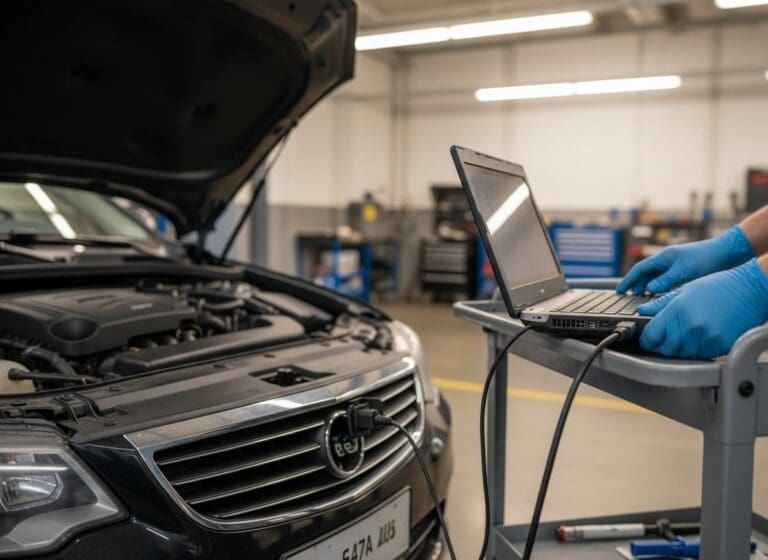
Accurate diagnosis is the most important step. The fault code tells you something is wrong in the NOx/SCR system — it doesn’t tell you exactly what. A proper diagnostic involves:
- Reading live sensor data, not just fault codes
- Checking upstream and downstream NOx readings against expected values
- Inspecting the wiring harness and connectors for damage or corrosion
- Testing the SCR catalyst’s conversion efficiency
- Checking AdBlue quality and the injector system if AdBlue is fitted
Only once the root cause is confirmed should any parts be ordered or fitted. A methodical approach saves money — and the frustration of replacing an expensive component that wasn’t the problem.
Frequently Asked Questions
Can I drive with a NOx sensor fault?
You can drive in most cases, but the vehicle may be in limp mode or running inefficiently. On some vehicles a countdown will appear — if you ignore it, the car may refuse to start. Get it diagnosed promptly to understand the severity.
Will my car fail its MOT with a NOx fault?
Potentially yes. A NOx fault that puts the engine management light on will fail the MOT. Even without the light, if the vehicle’s emissions are outside limits due to a faulty NOx/SCR system, it will fail on emissions too.
How much does a NOx sensor cost to replace?
Expect £200–£600 all-in for sensor replacement including parts and labour. Premium vehicles at the higher end of that range. Get a diagnostic first — the fault may be in the wiring rather than the sensor itself, which costs considerably less to fix.
Is a NOx fault the same as an AdBlue fault?
Related but not the same. AdBlue faults typically involve the dosing system or fluid quality. NOx sensor faults involve the sensors themselves or the SCR catalyst. However, they often interact — a faulty NOx sensor can trigger AdBlue-related warnings, and vice versa.
How long does a NOx sensor last?
On most diesel vehicles, NOx sensors typically last 80,000–120,000 miles. Vehicles driven mostly on short urban journeys or that have had oil contamination issues may see sensor failure earlier.
NOx Fault? Get It Properly Diagnosed
We run a full diagnostic to confirm whether the fault is the sensor, the wiring, or the SCR catalyst — before recommending any repair. No guesswork, no unnecessary parts. Same-day diagnostic appointments available across Stoke-on-Trent and Staffordshire.