NOx Sensor Replacement Cost UK: What Actually Drives the Bill
Why two vans with the same fault code get quotes hundreds of pounds apart — and how to work out which one you are before you agree to anything.
Under the MOT rules a diesel first used on or after 1 July 2008 fails outright if the engine management light is on — DVSA classes an engine MIL that is inoperative or indicating a malfunction as a major defect. That single line is why a NOx sensor fault stops being a nuisance and starts being a deadline. It also explains why so many drivers ring round for a price before they know what is actually broken.
How much does NOx sensor replacement cost in the UK? There is no single figure, because the bill is built from four separate things: which of the vehicle’s NOx sensors has failed, whether the part is a genuine or aftermarket unit, how long it takes to reach and free off, and how much diagnostic time is needed to prove the sensor is the fault rather than a symptom. Two vans showing the same code can be hundreds of pounds apart on all four counts.
That is not a dodge. It is the honest answer, and it is the one most price pages avoid because a specific number wins the click. We would rather you understood the four variables, because once you do, you can tell a fair quote from a lazy one in about ninety seconds.
What a NOx sensor actually does — and why there is usually more than one
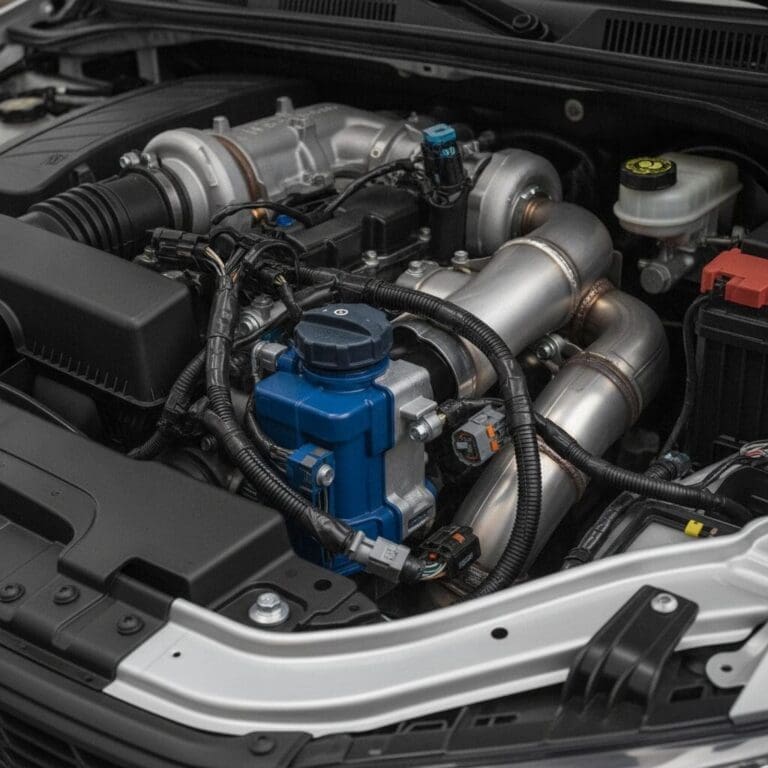
On a Euro 6 diesel the NOx sensor is the SCR system’s referee. It measures oxides of nitrogen in the exhaust stream and reports back so the ECU knows how much AdBlue to dose. Get the reading wrong and the whole after-treatment strategy is working blind.
Most modern diesels carry two: one upstream of the SCR catalyst and one downstream. The upstream sensor tells the ECU what is arriving; the downstream sensor tells it whether the dosing actually worked. Some larger commercials carry three.
This matters commercially for one blunt reason. A quote for “a NOx sensor” is meaningless until you know which one. The downstream unit is often buried further back, sometimes behind heat shielding, and on a vehicle that has spent six winters on Staffordshire roads the difference between an easy removal and a seized one is real labour time.
Downstream (post-SCR)
Sensor + control module as one assembly
On many vehicles the sensor and its control module are supplied as a single sealed assembly, which is why NOx sensors cost noticeably more than a lambda probe. You are not buying a probe; you are buying a small networked module with its own wiring loom.

The four things that move the price
| Cost driver | What makes it cheaper | What makes it dearer |
|---|---|---|
| Which sensor | Upstream unit on an accessible pipe run | Downstream unit behind heat shields or under-body panels |
| Part choice | Quality aftermarket unit from a known OE supplier | Main-dealer genuine part, especially on premium marques |
| Removal time | Sensor comes out cleanly on the first attempt | Seized in the boss, sheared thread, or heat-welded in place |
| Diagnosis | Clear, single stored code with live data that confirms it | Intermittent fault, wiring damage, or a sensor reading the consequence of a different problem |
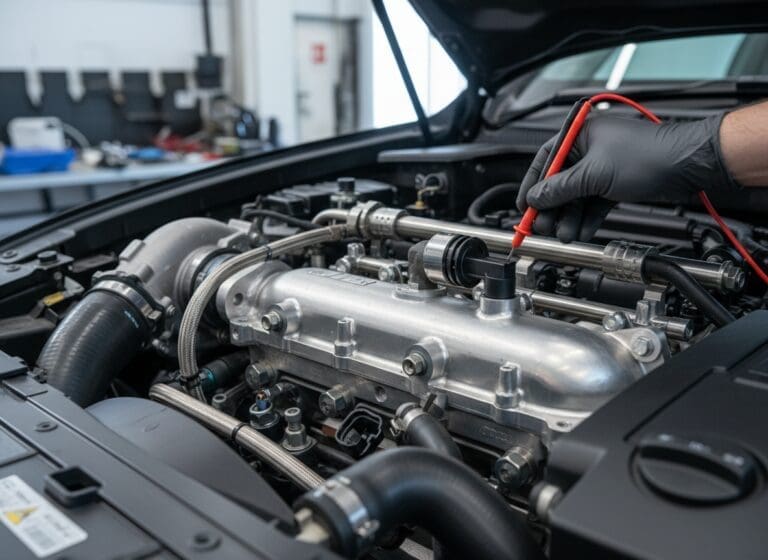
The fourth row is the one that catches people out. A NOx sensor that reports impossible values is sometimes a failed sensor and sometimes a perfectly good sensor honestly reporting a system that is not working — a dosing fault, a blocked injector, a tired SCR catalyst or a wiring chafe. Fitting a new sensor to the second case buys you an expensive part and the same warning light a fortnight later.
The mistake we see most. A sensor gets thrown at the code because the code has the word “NOx” in it. Ask any garage quoting you whether their price includes proving the sensor is at fault, or only replacing it. Those are two different jobs and only one of them is a fix.
Why we do not publish a flat NOx sensor price
We are a Stoke-on-Trent diesel workshop, not a fixed-menu fast fit, and a flat NOx sensor price would be dishonest on a job with this much variation. What we do instead is quote per vehicle once we have read the fault properly, and tell you which of the four drivers above is pushing your number up.
Any figure we give you is specific to your registration, your fault and the part we intend to fit. It is a quote for that vehicle, not a published price list, and it is confirmed before any work starts.
If you want the wider picture on what AdBlue and SCR work costs on this kind of vehicle, our guide to what AdBlue system repairs typically involve covers the neighbouring jobs, and the AdBlue repair service page explains how we work through a fault before touching a part.

Is it worth replacing, or should you live with it?
The MOT rule settles most of this. If the light is on and the vehicle is a 2008-or-later diesel, it is a fail, so “living with it” has a hard stop at your next test date. Everything else is a question of what the sensor is costing you in the meantime.
Replace sooner
- MOT is due within a few months
- The vehicle has already entered a derate or countdown
- Fuel consumption has visibly worsened
- It is a working van and downtime costs more than the part
Diagnose harder first
- The code keeps returning after a previous sensor was fitted
- Multiple SCR codes are stored together
- The fault is intermittent and temperature-related
- There is visible damage to the loom or connector
Worth knowing: an AdBlue leak on its own is not an MOT failure. DVSA’s inspection manual specifically excludes “fluid required for Selective Catalyst Reduction” from the fluid-leak defect. So a weeping AdBlue line will not fail your test — but the warning light it eventually triggers will.
Our view. On a road-registered vehicle the compliant fix for a genuine NOx sensor failure is to repair or replace it. Where we add value is in refusing to fit a part until the live data says the part is the problem. That is duller than a headline price, and it is the reason we do not see the same van twice.
Symptoms that usually come with a NOx sensor fault
You will rarely get the sensor fault by itself. It normally arrives with company: a dashboard warning, a stored code, and a change in how the vehicle drives.
- Engine management light on, sometimes with an AdBlue or emissions message alongside it
- A starts-remaining countdown appearing on the dash
- Reduced power or a full derate on restart
- Noticeably higher AdBlue consumption, or none at all
- Rough running that comes and goes with engine temperature
If you want the full symptom picture before you book anything, our write-up on how a failing NOx sensor behaves day to day goes through what each warning actually means, and the U029D communication fault guide covers the specific case where the ECU has lost contact with the sensor altogether rather than disliking its readings.
Common questions
Can you drive with a faulty NOx sensor?
Usually yes, for a while. Most vehicles will keep running but many begin a starts-remaining countdown or drop into reduced power once the fault is confirmed by the ECU. The practical limit is your MOT: an illuminated engine management light on a diesel first used from July 2008 is a major defect and a straight failure.
How long does a NOx sensor last?
There is no service interval for one — it is a fit-and-forget part that fails when it fails. In practice they tend to go on higher-mileage vehicles and on vans doing lots of short, cold journeys, because the sensor lives in a harsh, hot, vibrating environment and the connector is exposed to road salt and water.
Can a NOx sensor be cleaned instead of replaced?
Not reliably. Unlike an EGR valve, the failure is usually electrical or in the sensing element itself rather than a soot deposit you can remove. Cleaning the connector and checking the loom is worth doing, because a corroded pin can mimic a dead sensor — but the sensing element is not a serviceable item.
Do I need to replace both NOx sensors at the same time?
No, not as a rule. They fail independently and there is no shared wear mechanism that makes a healthy one suspect. If a garage quotes for both, ask what the live data says about the second one. On a very high-mileage vehicle doing both in one visit can save a second lot of labour, but that should be your choice, not an assumption.
Get a real number for your vehicle
Bring us the registration and the fault code and we will tell you which sensor, which part, and what the job actually involves before you commit to anything. We are in Stoke-on-Trent and we work on vans and cars from across Staffordshire and Cheshire.
About the author. Reviewed and signed off by Pro Remapping. We diagnose and repair AdBlue, SCR and DPF faults on cars and light commercials every week, using manufacturer-level tooling and live data rather than code-reader guesswork.
Prices for this work are quoted per vehicle after diagnosis and are not a fixed price list. Nothing on this page is a quotation.